Saturday, June 6, 2020

June Update

White floribunda rose by the fountain in full bloom.

It has been a tale of two extremes during the last month for the Grounds Department. In the middle of May the monsoons arrived and by the end of May we had accumulated around 7 inches of rain. Our normal procedure during heavy rains is to cease mowing operations and wait for a couple of days for the turf to dry out. Unfortunately, the wet weather did not cease after the wait period and we were forced to be more aggressive with mowing. The last half of May was so wet that we were unable to mow some areas with the riding mowers and had to walk and/or weed whip many rough areas around the course. Then the rain stopped. Currently, we are in a dry period and have switched our mowers for hoses. It was amazing how quickly the course changed from wet to dry. The irrigation system is now running and the cool season grasses are starting to show signs of stress, especially poa annua.

Poa annua (annual bluegrass) is a winter annual grass that typically germinates in the fall, goes to seed in the spring, and dies out in the heat of the summer. The seeds produced during the spring germinate again during the cooler temperatures of the following fall. It is a very prolific seed producer and can produce seedheads at very low mowing heights making golf courses an ideal place for poa to thrive. It has three main drawbacks. The first is its seed head production. When produced in the spring on putting green surfaces it decreases the smoothness and speed of the greens. The second is its inability to tolerate hot temperatures. Hot temperatures will severely stress the plant and eventually it will die off. The third is it is highly susceptible to many summer diseases, especially anthracnose. 

The main reasons why poa annua is so prevalent at WHCC is because this is an older golf course with an abundant amount of shade. We do strive to suppress and limit its growth in the spring with PGRs and overseed with better turfgrass species; however it is almost impossible to fully eradicate. We keep as much of it green and alive, as possible, in the fairways, tees and greens during the summer by keeping adequate moisture in the soil, and syringing (keeping the soil temperatures down), but some of it will die and cause dead patches to occur. The great (or bad) thing about poa annua is that when the days get shorter and the temperatures cool off, the seed that was put down in the spring, will germinate and fill back in the bare areas.

For more information on poa annua click here!


Difference between solid stand of bentgrass vs bentgrass mixed with poa annua. Bentgrass is the darker green color on the bottom left corner.

Poa annua stressing in the rough

Annual bluegrass showing signs of heat stress on #15 fairway


The current hot and humid weather has created a great environment for cool season grass summer diseases to take hold. Anthroacnose, brown patch, pythium blight, and summer patch are all examples of some of the summer weather diseases that we are fighting against. The agronomy team has kept up with the spray applications and hopefully most of the diseases will not occur.

Spraying fairways


Also, we have begun to spray the course for broad-leaf weeds. The heavy rains, and now hot temperatures, have put this procedure on hold but will begin again when temperatures moderate. 

Spraying broad-leaf weeds in the rough


The far practice tee has been aerated and the lower tee is currently in use. It should be healed and ready again in about three weeks.

Far practice tee after aeration


The gravel cart paths located on #4, #8, #11, and #18 have developed many pot holes. The crew has filled in many of these holes with crushed limestone.

#4 cart path after filling in holes


We have had a couple summer wind storms blow through leaving a lot of debris and large broken limbs to clean up.

broken limb in ash tree by #11 tee

Large limb hung up in the shagbark hickory tree by #17 tee.


On the horticulture side, all the summer annuals are planted. We have some new flowers including, bromeliads, cleome, gardenias, bamboo palms, and Mexican petunias. The new beds that were planted in the spring are filling in and starting to bloom. Now the maintenance of fertilizing, watering, and pruning take center stage and these plants should double in size by the 4th of July.

The bed by #13 tee with plants getting bigger

Late freeze damage on the taxus bushes by #5 tee. The early May frost caused this damage.

Perennials behind #11 green getting ready to bloom


Mexican petunias in front, elephant ears, and crotons in the back


Gardenia flower by the entrance.Very fragrant.


Bromeliads


The Delhi area has the nickname of "Floral Paradise of Ohio," and for good reason. At one time there were approximately 60 operating greenhouses in Delhi, now there are around 6. Here at WHCC we are trying to keep this nickname alive by purchasing our annuals from western hills distributors and taking pride in our horticulture program to help keep the West Side the "floral side" of Cincinnati. I came across this video made in 2000 about the history of greenhouses in western hills. It is interesting to learn about this area’s rich history with horticulture.
Here is a link to the video-click here


Brad Piecuch
Grounds Superintendent


Saturday, May 9, 2020

May Curves


In baseball, nothing throws a batter off more than expecting a fastball and instead getting thrown a curve. It’s unexpected and usually throws the batter's timing off, causing a swing to miss. Believing that sports can be a metaphor for life, life's curves can be just as as unpredictable. Lately many surprising situations have been thrown at the Grounds Department. The Covid-19 situation is an obvious one that everybody is currently dealing with and the agronomy team is no exception, but mother nature also seems to be following suit. Frost and freeze delays are common in March and early April. It becomes unexpected and disruptive when they occur in May- a time when tee times get earlier and earlier. Frost delays really throw us off our game. Greens mowing, rolling, changing cups, moving tee markers, and raking bunkers are all jobs done ahead of play. Normally to combat the morning tee times we begin work earlier, but with frosty mornings that is not possible. We know that everyone is excited to get out and golf, but the daily course maintenance takes time to accomplish, and during these curve-ball days we just ask for patience and time so we can accomplish our maintenance without disrupting play. 

The new way to limit cup exposure during the Covid-19 era.Thanks to Mr. Kelley for the new golf ball lifters. Use your putter head to lift the lever on the flag stick and your ball will lift out of the cup.


The aeration that took place on May 4th went well. The day turned out to be perfect for deep-tine aeration (8" deep), and topdressing (for more information on the importance of aeration click here for an informative article by the USGA). We did have an unexpected situation occur on #4 green and on a couple green collars (#2 and #11). The pull-behind tractor aerator that was used happened to find a couple of our old irrigation heads (from the 1986 installed hydraulic system) that were still in the ground. The aerator tines punctured the old head and it stuck on leaving some bigger holes a quarter of the way down #4 green. We filled in the holes with sand and put small bentgrass plugs in them. This should heal up in the next month or so. 

Big holes on #4 green after old irrigation head got stuck in one of the tines

Holes filled in with sand and small bentgrass plugs

Small flag showing the 8" depth of the aeration holes


The city water flows into our irrigation system in the irrigation pit. This is where the water is turned off for the blowout of the system, and on for the spring start up. Periodically we check down there to make sure there are no leaks or other surprises. Well we were greeted with an unexpected surprise when we opened the lid to the pit and found it half way filled up with water. The sump pump had broken and we needed to pump out the pit and replace it with a new one. The amount of water in the area made this task challenging but it did get accomplished and hopefully the new pump will buy us many more years before it needs replacing again.

Pumping out the irrigation pit to fix the sump pump


Lastly, while changing the cart restriction sign in the rain, a small red puddle was noticed by #1 cart path.  The smell revealed that we had a diesel fuel leak and upon further investigation it was discovered that our 20 year old diesel fuel tank had sprung a leak. With the help of our handy assistant mechanic and Wardway fuels we siphoned out the remaining fuel and put a temporary tank in front of the grounds building wall by the mulch pile. Since we caught the leak early very little fuel was lost. Hopefully the grass along #1 cart path will be spared but only time will tell.

The leaky diesel tank

Temporary diesel tank


Now that I am done with my therapeutic venting, there are other tasks being accomplished by the crew. May is an extremely busy month for the Grounds Department. The May temperatures combined with the spring fertilization cause the grass to explode with new growth. Of  course, all the new growth must be cut, and during weekdays we have every mower in the shop out to accomplish this.  On the horticulture side all the tulips from April have been removed to make way for the summer annuals.  A new landscape bed has been created at the corner of Neeb road and Cleves-Warsaw. It is replacing the overgrown prague viburnums and consists of emerald green arborvitaes, pink and red drift roses, and moonbeam coreopsis. This bed will improve aesthetics and visibility to a very busy Delhi intersection.

New landscaping. Mulch to follow

Julio fly mowing around #6 green. We are trying to fly mow more often around steep green banks to decrease ruts left by mowers.


As we get deeper into May, hopefully mother nature cooperates and warmer temperatures are not far away. In the next couple weeks the summer annuals will be planted, outdoor dining will begin, and it will look more like summer.  Meanwhile, the agronomy team is waiting on the next pitch-hope it’s a fastball!

Brad Piecuch
Grounds Superintendent

Sunday, April 26, 2020

Around the Grounds in Spring


Spring-time maintenance is on schedule for the Grounds Department. In early April the greens were verticut and topdressed (click here for more information). The following week a spray application was performed with a plant growth regulator added to suppress the poa annua seed head growth.  The greens at WHCC are composed of both bentgrass and poa annua (annual bluegrass). When annual bluegrass begins growth after dormancy it puts on a flush of seed heads, and this tends to slow down green speed dramatically for about a month. This year with the early PGR application we were able to suppress some of the seed head growth and, consequently, the green speeds have been improved. In 2019 for the month of April we averaged a green speed of 9.85. So far this year the April stimpmeter has averaged 10.64. The recent colder temperatures are a contributing factor, but we are very pleased with the early green speed results and will continue to monitor moving forward. Also, we have fertilized with a 10-2-10 granular fertilizer to give the greens a good shot of nitrogen before the summer stress sets in.  An important date on the horizon is May 4th. This is when the greens, if the weather cooperates, are scheduled for deep tine aerification.

Verticutting on the putting green 

Poa annua seed heads showing up in an approach

#17 green topdressed

#7 green after a low of 23 degrees


#3 green a week later after granular fertilization and warmer temperatures. The greens are greening up!


 The spring fertilization/pre-emergent crabgrass application is nearing completion. 14,000 pounds of fertilizer with dimension have been applied to the rough areas. This will thicken and green up the rough in the near future and should keep crabgrass from germinating for at least 3 months. In addition, the fertilizer and crabgrass control has been applied to the tees and fairways.
Michael Westendorf applying a 13-0-0 fertilizer with dimension in the rough


The Grounds Department, in conjunction with the golf professionals, continue to fine tune how to best limit a golfer's potential exposure to the coronavirus pathogen. We started out with raised cups on all the greens; however, after many golfers began signing up for their PGA tour card because of significantly lower scores, we decided to use cut off pool noodles instead. This will allow the golf ball to fall into the hole and be accessible for picking up without touching the inside of the cup or flagstick. This is making golf more realistic than before.
Pool noodle in putting green cup

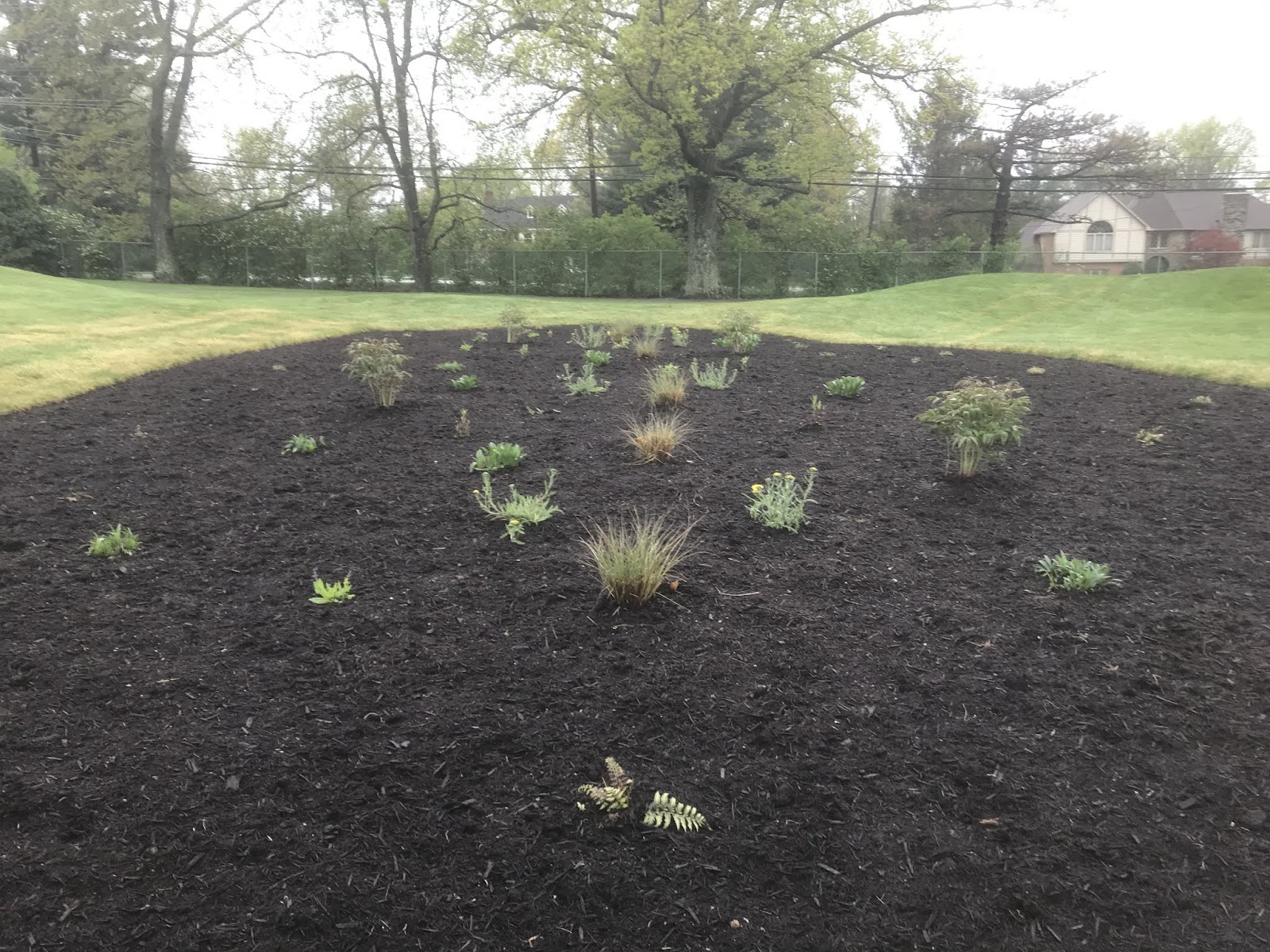
 The Landscape Department (lead by our new Horticulturist Kyle Brater) is hard at work edging, cleaning out and mulching all the landscape beds around the clubhouse and on the golf course. A native wildflower/perennial garden has been created by #13 tee. All the plants in this bed are herbaceous perennials-meaning they die down to the ground every winter. They are small right now but will continue to grow as the temperature warms. The excavated sod from this area was used throughout the course to fill in ruts and bare areas adjacent to some cart paths.

New perennial garden #13 tee and behind #12 green


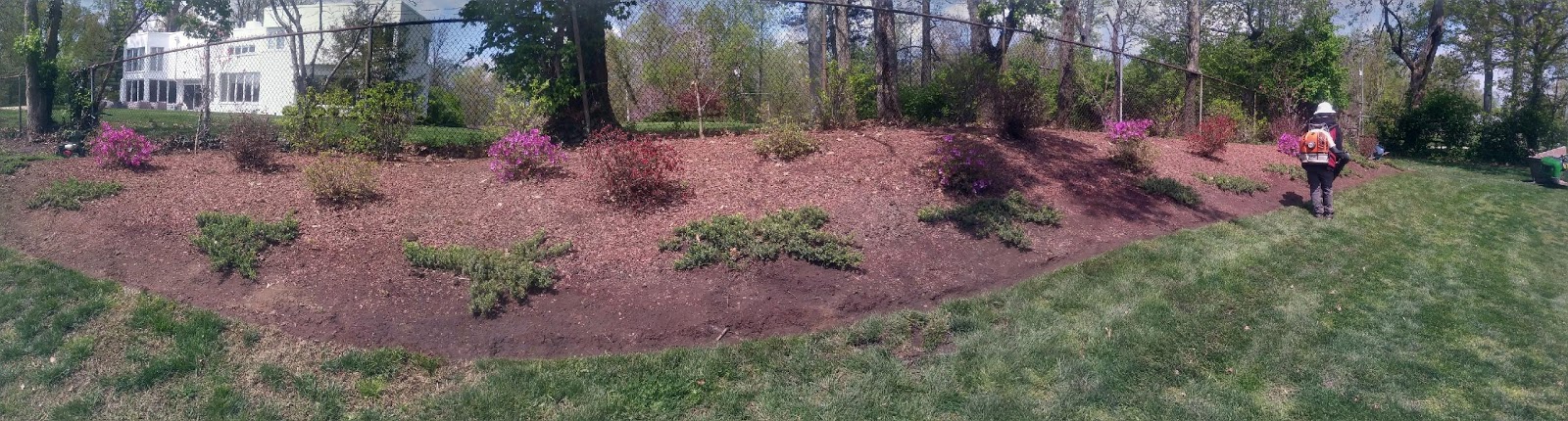
#3 landscape bed before edging, cleanup and mulching


After


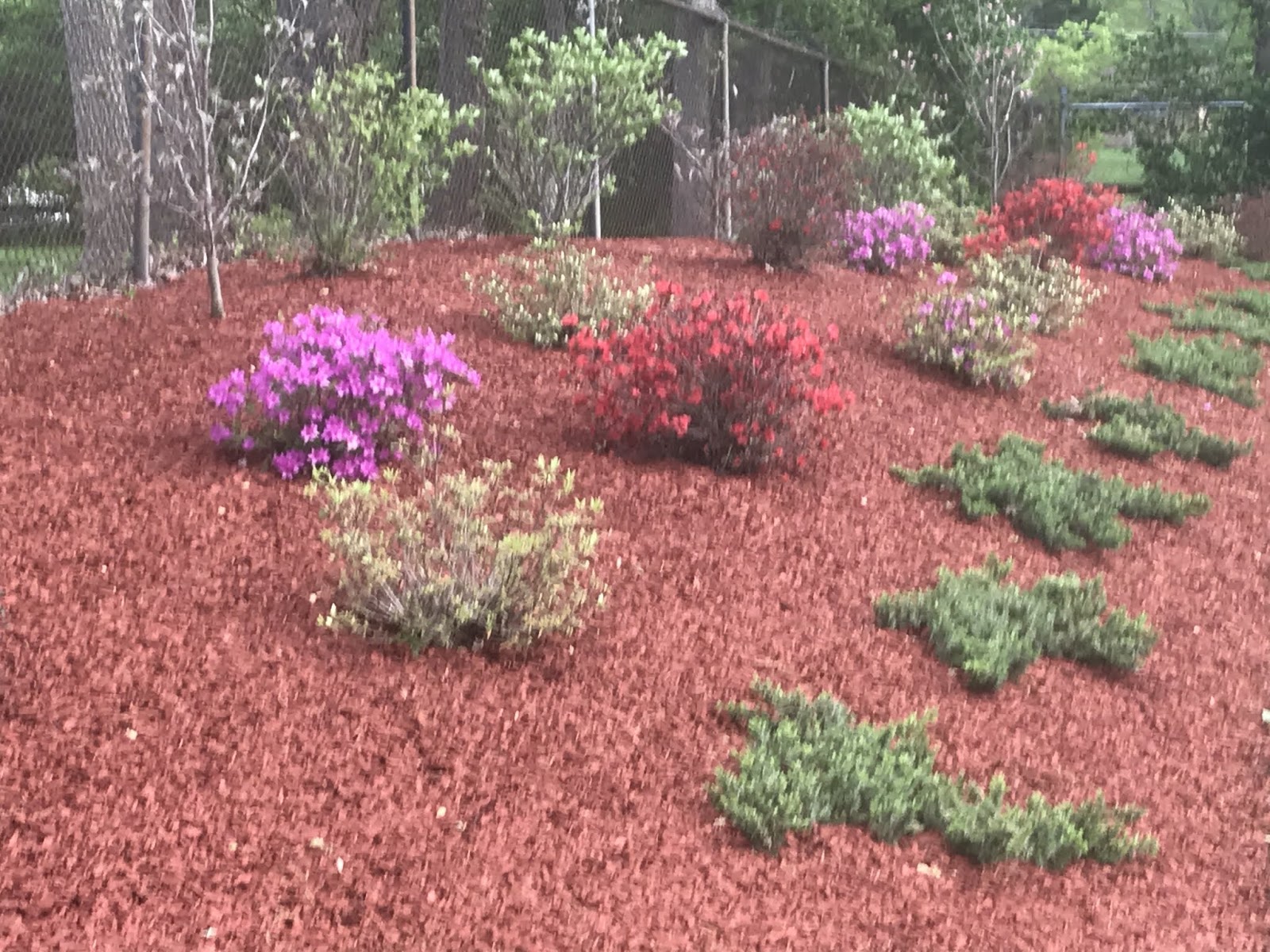
Azalea flowers giving an Augusta like feel in landscape bed behind #3 green

Pine straw added to the bed behind #14 tee and #17 green

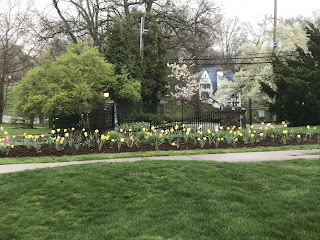
 Mother Nature helped the spring flower show this year. Early April was well above normal pushing the tulips and tree flowers into blooming. Then the temperature began to drop and the last three weeks have been well below normal. This caused the flower times to be extended for many of the plants. The tulips normally bloom for about 2 weeks, but this year we enjoyed their show for almost a month's time. Now it’s time to remove the tulips to make room for the summer annuals. If anyone wants some of these bulbs we will place them by the grounds building. Take as many as you want, we have 5,000 tulips available!

Tulips


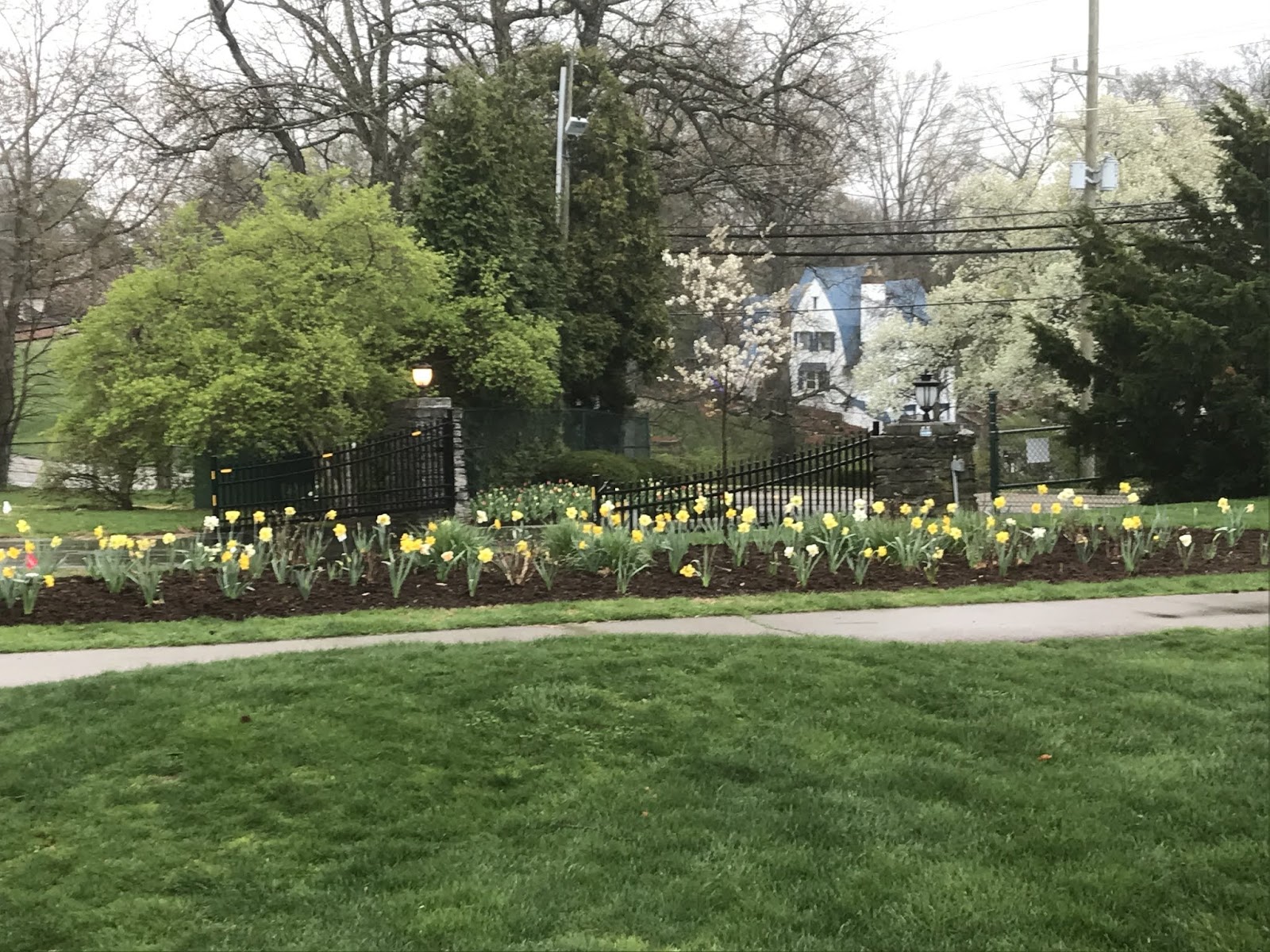
Service berry and daffodils blooming in #11 landscape bed

Daffodils in full bloom

Appalachian red redbud tree in full bloom

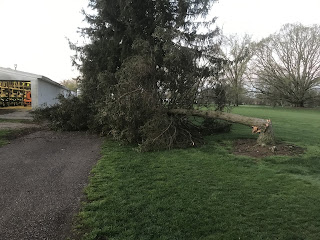
Finally there have been some recent windstorms that blew through the course. In particular the storm that hit on April 8th blew over 3 trees that had to be removed and much debris picked up. All three trees were evergreens and after the cleanup their stumps had to be ground up and filled with topsoil and seed.
White pine blown into another white pine.

Norway spruce blown over

 As the temperature continues to warm, daily maintenance will take over the majority of our time; however, there is still more projects on the horizon. We will update membership as they occur and in the meantime we hope everyone stays safe and healthy!

Brad Piecuch
Grounds Superintendent