Thursday, December 1, 2022

Maintenance and Project Update

Healthy new turf on the north driving range tee.

The two-year driving range project is nearing completion. Phase 1 started in August of 2021 and consisted of a new, larger south tee, a new chipping green, target greens, parking area and cart path, expanded putting green, landscaping, and new surrounds. Phase 2 started in August of 2022 and included a new north tee, a long winding cart path, an expanded hitting zone, and new trees planted. The design, earth moving/shaping, and irrigation were all contracted out. In house labor acted as the construction crew on this project and was used to install drainage; haul materials; prep areas for seed; seed, straw, fertilize, and water the new grass; plant/design landscaping; convert target greens to zoysia grass; and project manage.  The grounds crew did a fantastic job working on construction while maintaining the golf course/grounds and being heavily involved in other projects such as the Verdin clock/ #1 tee area renovation, the lighting of the champion tree, #13 green drainage/leveling, and the cart barn construction. Overall, a total of 1,892 in house labor hours were used for the entire driving range project.

The new north tee was seeded in early September and looks full and healthy going into the winter. It is amazing how quickly grass germinates when seeded at the proper time. Last year many areas did not get seeded until October and struggled to fill in while this year the results on the tee and surrounds have been much more promising. Next up will be to get the cart path paved and the safety fence built. Hopefully, the new north tee will be ready to open around Memorial Day.

Phase 1 Pictures

This was the first step of the project, spraying glyphosate in mid-August of 2021.

Old driving range tee after spraying

Constructing the new south tee

Building the new chipping green

Drainage installed in chipping green

Irrigation install

Futera matting on top of seed

Prepping chipping green for seeding

Chipping green day 1 after seeding

Putting green expansion

chipping green beginning to germinate

Planting #5 landscaping

Chipping green growing in

Winter grow cover for putting green

Sodding on the floor of the range in early March


Installing innovation zoysia grass on target greens in June


Phase 2

Shaping and clearing area

Drainage work

Bentgrass seed starting to germinate on the tee

More drainage


 Completed Project

New North Tee

Completed range floor. Innovation zoysia is a southern grass that turns dormant in the winter adding a nice contrasting color to the target greens this time of year.


Completed chipping green, south tee, and surrounds

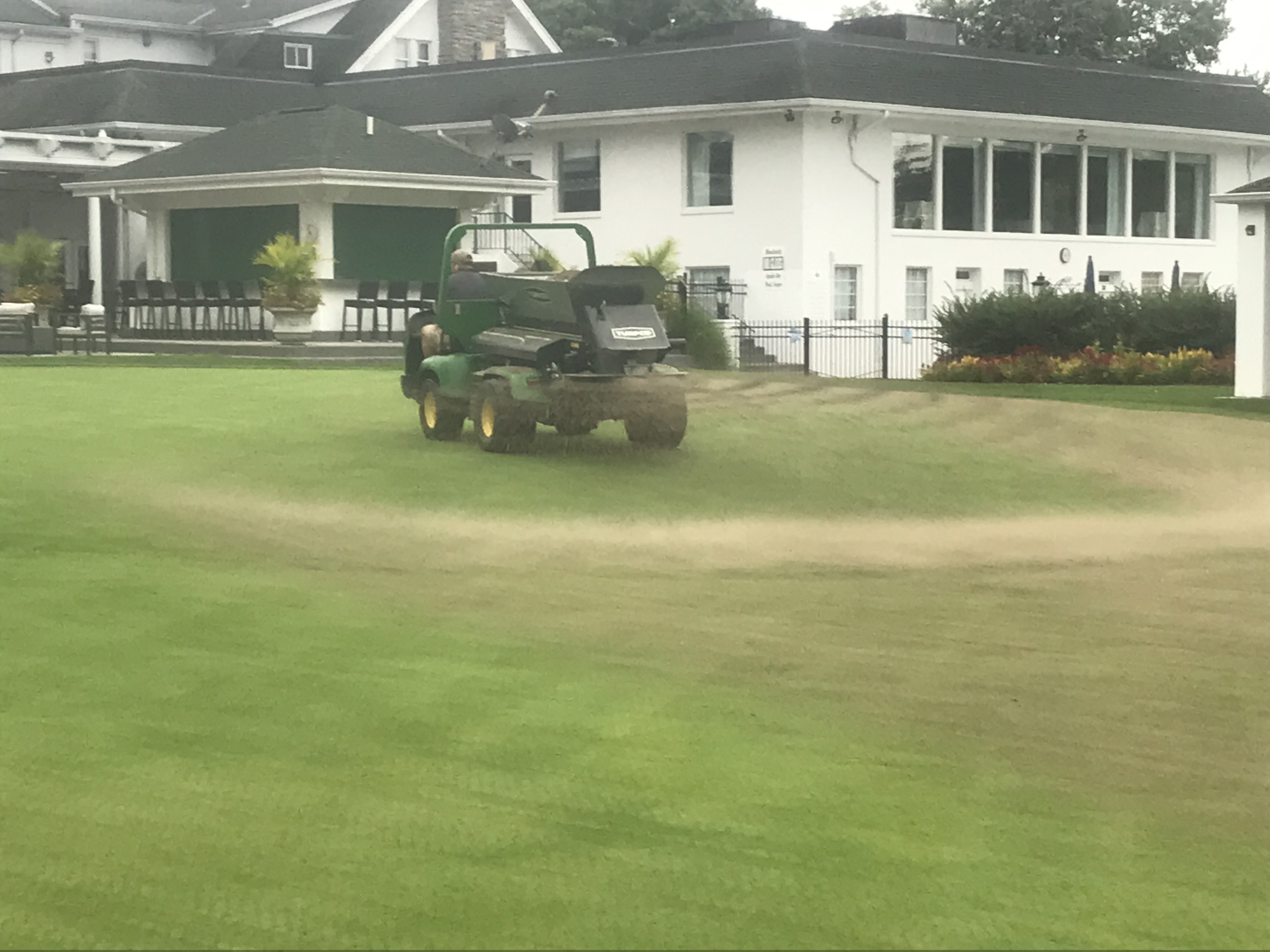
Meanwhile, out on the golf course, we are finishing up on fall maintenance practices before the cold temperatures set in. Fairway fertilization was completed in mid-November and a granular fertilizer was applied to the greens later in the month. The practice tee was solid tine aerated this year because the new grass has not accumulated much organic matter; however, in subsequent years core aeration will have to take place once OM starts to accumulate. The project work and mother nature helped to put us a bit behind on rough aeration. We were able to complete it by the end of November, but some locations may be muddy for a while longer until the aeration plugs fully break down. Next up will be to apply snow mold protection and poa annua seed head suppression to the greens in early December.

The height of cut on the greens was raised throughout the month of November to help the grass store carbohydrates and to help the plants survive winter conditions. Understand that green speed will decrease during the off season because of decreased mowing, rolling, and topdressing. Once spring begins the greens maintenance program will resume, which will increase the green speeds. Also, the winter tee markers have replaced the in-season markers and are located on the white and green tees to let the back tees heal in before next season.

Aerating the south practice tee

Aerating rough

On the horticulture side, garden steps have been installed between the cigar hut and outdoor bar. This should give a clear level pathway for people transporting between the hut, bar, and pool. The springtime bulbs are currently being planted. There are around 5,000 tulip bulbs planted around the clubhouse grounds. It is recommended to have them planted to allow for at least 8 weeks of cold temperatures, which helps the bulbs to bloom on time for their April display.

Installing garden steps


Planting bulbs

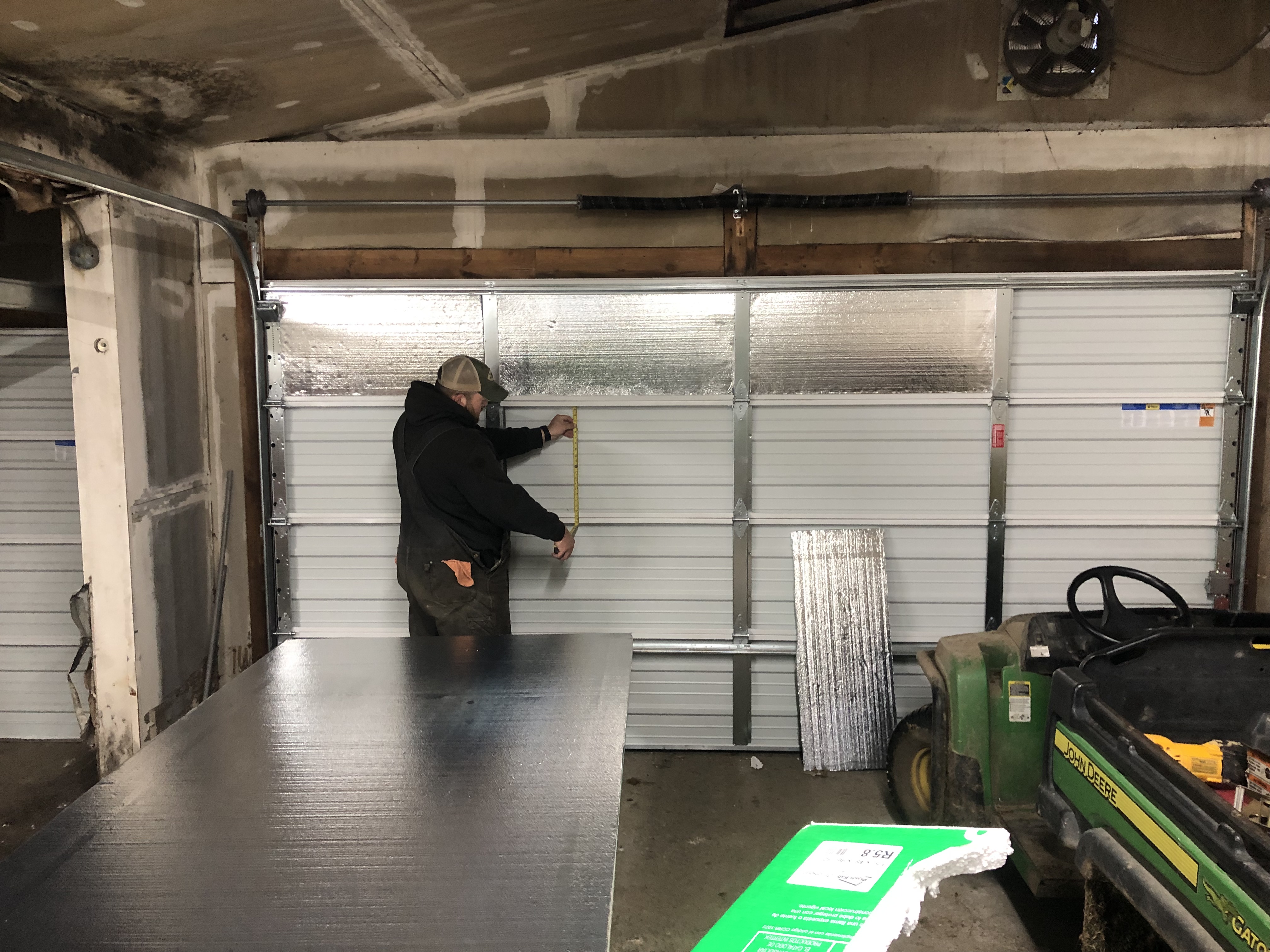
The mid November cold snap allowed the crew to get much needed building maintenance accomplished. The old cart barn wing of the grounds building is being converted to an equipment storage area. We installed two electric Dayton 15kw 51,200 Btu heaters to keep the gas and hydraulic fluid on the equipment from freezing. In addition, insulation was installed on the new garage doors to keep heat from escaping. The long-awaited equipment lift (ordered January of 2022) has arrived and will make routine maintenance much easier to complete.

Heaters installed

Inserting insulation

Unloading the equipment lift


The installed equipment lift


Christmas came early for head mechanic (Jim) and his back. Routine maintenance can now be done standing up instead of laying on the ground.

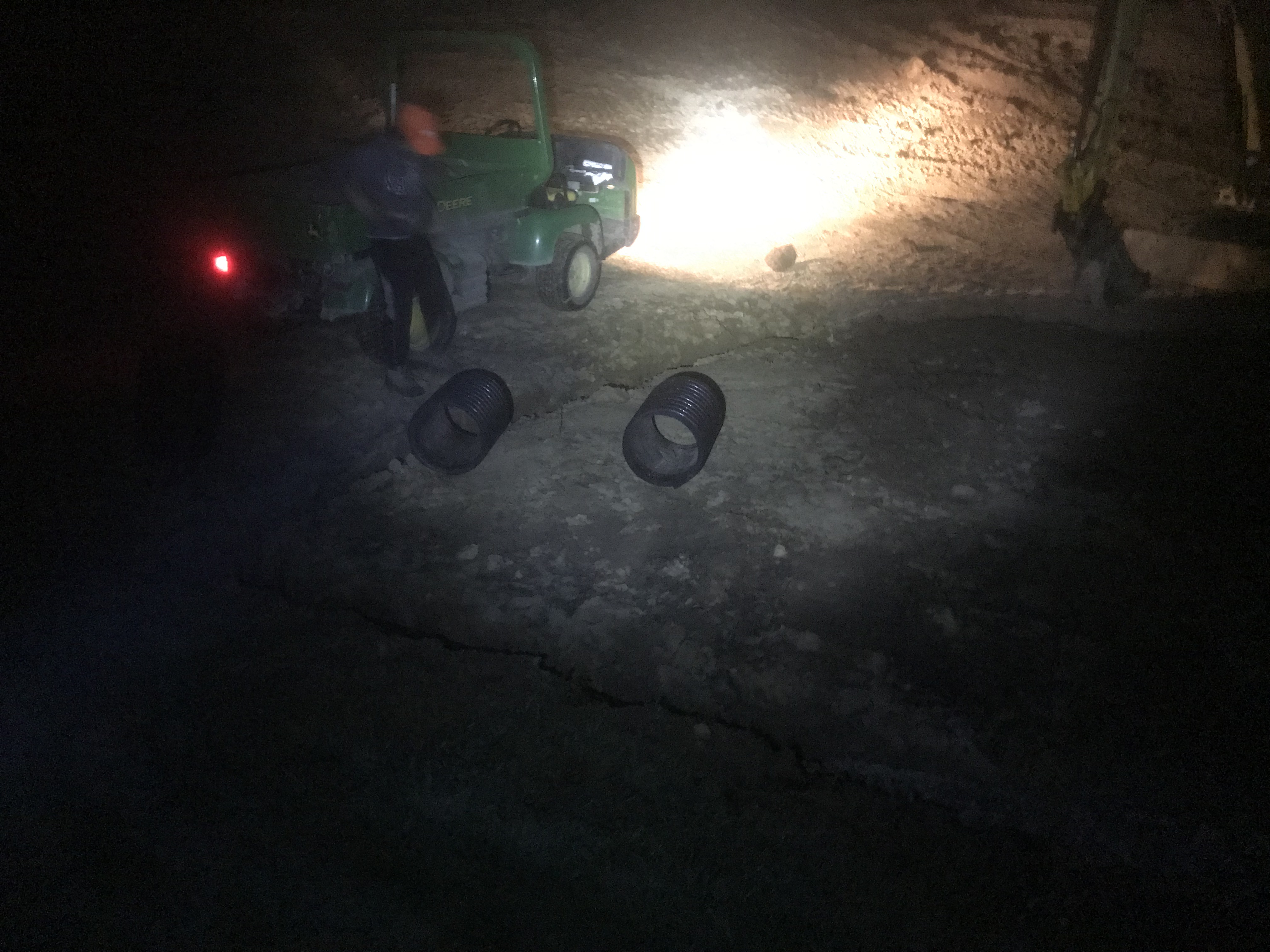
Also, the colder temperatures have allowed us to tackle some drainage projects. The area between #9 tee and #6 fairway has been extremely wet during the season because of the increased drainage on #8 green that was installed last year. All the drainage from the green and bunkers drains through the drain tile located in the wet area. Unfortunately, the old tile was clogged with roots and mud. This backed up the water and all of it drained out in front of the dawn redwood tree. This location was extremely wet and now we are installing new tile to move the water away from the area and into tile located parallel to #6 fairway.


4" drainage installed between #9 tee and #6 fairway


On the horizon will be winter tree work. The scope of the work has been approved and once we are caught up on other projects, we will begin to tackle tree excavation and pruning. Also, winter mechanical work is beginning and will take a couple months to accomplish. I will update once these projects begin, and on behalf of the entire agronomy department we wish everyone a Merry Christmas and a safe and happy New Year!


Brad Piecuch

Grounds Superintendent


Monday, October 31, 2022

Fall Update

 In early September I made the mistake of saying we are over the hump. The month of August produced timely rainfalls and cooler than normal temperatures. September is usually the driest month of the year for the tristate area and after two decent rainfalls earlier in the month it looked like it was smooth sailing into the fall season. It was at that point that Mother Nature, sensing my confident, optimistic outlook, turned off the spigot and gave us an over 30 days stretch of less than .07" of rain. This was the driest stretch in over a decade for the Cincinnati area, putting the aging irrigation system and turf to the test.

Keeping adequate moisture in the ground during drought periods at WHCC is a daunting task. The amount of large pin oak trees located throughout the golf course seem to suck up most of the water leaving the surrounding turf brown and stressed. The hilly terrain lets water pool in the valleys but stays dry on the hillsides. A single irrigation head irrigates a 2,500 sqft area and in some of these locations wet pockets can form right next to dry areas. Add in stressing turf due to aeration and the situation becomes even more complex. During this latest dry stretch, we made daily adjustments to the nightly irrigation system to minimize dry spots and wet pockets. Ideally hand watering should be utilized but with the current labor shortage and the sheer size of hand watering many acres of turf, greens were the only surfaces to get that benefit. As I write this, two recent rain events have helped to alleviate some drought stress; however, we need more storms and heavier amounts to fully dig out of the rainfall deficit. 

A perfect example of coverage from a single irrigation head. The head is circled in blue. Behind it is a wet pocket surrounded by signs. In front, circled in red, is a dry area. When watering the dry area at night the head will also water the wet pocket. Hand watering is the only way to hit just the area that needs it, but this is just one example of many such locations on the course.

This picture shows the reason for the dry turf. The large pin oak tree located to the left is winning the moisture battle.

The irrigation system has showed its age during this dry spell. There were two communication boards that failed and needed replacement. These electrical components are located in the green satellite boxes spread throughout the golf course. The lynx program on the main computer communicates to individual satellite boxes, then the boxes communicate to individual irrigation heads to turn on or off based on watering amounts. A nightly download fail, along with areas not being irrigated, led us toward the investigation. Based on diagnostic tests done on the computer and the inability to run manual programs from the individual satellite boxes we discovered that the communication boards needed replaced. In years past we had issues with the timing mechanisms, and all were replaced in 2017. Hopefully, bad communication boards do not turn into a trend; however, these components do not last forever and at some point, replacement will be warranted.


A defective communication board on the driving range satellite box. Usually, replacement of a blown fuse located on the board will fix the problem, but after all fuses checked out ok a defective board became apparent. Luckily, we are able to fix in house once the board is ordered.


Picture of a timing mechanism. This was the culprit in the past, but after replacements seems to be working well.


In addition, the wind sensor on the weather station failed. This is an important component that senses wind speed which is part of the equation for the evapotranspiration rate. This rate is used to make decisions on nightly irrigation amounts. Without wind speed, ET rates will be much lower leading to lower supplemental water. This needed to be fixed and after consulting different technicians and doing some electrical investigation, it was discovered that a bad reed switch was probably the culprit. We decided to fix it in house to save on cost ($2,000 dollar to send in and fix, $90 to fix in house) and time. The weather sensor was disassembled, the reed switch replaced, put back together, and is now functioning well.

Wind sensor located on the right of the weather station.

Locating the reed switch inside the wind sensor.

Phase 2 of the driving range project is in the grow-in phase. The new tee looks great, and we have begun to mow. It should continue to fill in as we head later into the fall season. Now the biggest issue will be to keep the area disease free as we continue to push growth with fertilizer applications. The surrounds began to grown-in nicely, then the drought hit. Some non-irrigated areas have more growing to do and hopefully Mother Nature will bring some much-needed rainfall to help.

The net in the back of the driving range was taken out and replaced with a row of 'sun valley' red maple trees. This is for safety, blocking shots from the cart path, and to keep sight lines and golf balls moving toward the floor of the range.  

David mowing the new tee for the first time.

New sun valley maples planted in place of the net.

Taking down the old driving range net.


Jim Hessel has been busy in the mechanic shop. Recently, the brake disks wore out on one of the Kubota tractors. The tractor had to be completely taken apart to reach the disks. This was a big, time-consuming job, but with much elbow grease and good mechanical knowledge, it was able to be fixed and is now running great with well-functioning brakes. The mechanics are constantly completing these types of tasks to keep the equipment fleet running and the grounds operation moving forward.

Jim under the tractor

Locating the brakes. The whole left side of the tractor had to be disassembled.

The old brake disks are on the top of this picture. Notice the material is worn off. The new brake disk shows what the material is supposed to look like on the perimeter.


Garden steps have been installed behind #1 tee heading toward the putting green. They are spaced roughly 10" apart and hopefully will be used as a path for golfers heading toward the putting green, to keep wear patterns down on the surrounding turf. Next up will be installing stones between the cigar hut and the outside bar. Also, the new cart path, landscaping, and surrounds are coming in nicely along the new cart barn building and #18 rough.


Installing the steppingstones.


The cart path, landscaping, and surrounds completed.

Currently, leaf removal is taking up the majority of the grounds crew's time. This is a big project and will take months for all the leaves to fall and cleanup to be completed. We will continue to do our best to keep up with the debris, but with around 1,000 trees lining the course, most being over 70' tall pin oaks, some days we will lose the battle before we start to make significant progress.

The never-ending leaf drop of the pin oak trees.

The aeration of the greens, tees, and fairways is completed. On deck will be the rough aeration and once the new driving range tee is shut down for the season it will be aerated as well. Winter tree work is in the process of being finalized and approved and I will update once everything is ready. Hopefully, November rains will make up for the current moisture deficit.

An example of a declining pin oak. The pin oak by #12 tee, in the background, is showing severe canopy dieback. Ganoderma infection was noticed a couple years ago by the consulting arborist along with some hollowness at about 8 feet off the ground. The roots are surrounded by cart path and parking lot leading to increased stress.  It is now showing significant canopy decline and may need to be removed.


Brad Piecuch

Grounds Superintendent

Thursday, September 22, 2022

Dirty Jobs

Dirty Jobs is a popular cable TV show that highlights the importance of the trades and blue-collar workers. The host, Mike Rowe, has been a champion of the blue-collar trades, construction, and hard work. One of his famous quotes is "If everybody had an office job who would build the offices?" Or in our case who would build the golf courses? Thankfully, there are people like Russ Macke and hard workers on the WHCC grounds crew that over the past year worked extremely long hours to transition the old small driving range into a bigger, more golfer friendly complex.

Phase 1 of the driving range renovation included installing a new chipping green, expanding the practice tee, building target greens, and expanding the putting green. Now Phase 2 is building a new north tee. This phase of the driving range project is now in the grow-in stage. Much dirt was moved and shaped by Russ Macke and it is hard to remember that most of the area was a forest a little over a month ago. The drainage has been installed, irrigation pipe dug in and connected, the surrounds seeded with fescue and either strawed or matted, and the new tee seeded with bentgrass. Part of the back of the old tee was eliminated. The sod in this area was still in good shape, so before excavation we stripped the sod and inserted it into the beginning of #11 fairway, a problem area that was turning into more goosegrass than bentgrass.

 With seeding timing is everything. Last year the chipping green was the first area seeded in late September with many of the surrounds not getting finished until late October. Consequently, the grow in phase was slow with grass struggling to germinate throughout the winter into this past spring. This year everything has been seeded by mid-September which has resulted in these areas quickly germinating. The first area was seeded in late August, and we have already mowed it twice. Hopefully, the germination on the tee and surrounds continues its rapid pace.

Shaping the new tee.

New cart path and surrounds installation


Drainage being installed


David, Raymond, Ricardo, and Miguel installing drainage pipe

Prepping the new driving range tee
                             

Germination on the tee surrounds
 

Bentgrass starting to germinate on new north tee

Wheels replacing the goosegrass infested fairway area with bentgrass sod.

#11 fairway area completed

Tee a week later


Mark and Ricardo digging in a draintile line

Hate is a strong word, but in the case of hydraulic leaks it may not be strong enough! After going over a year without one hydraulic hose leak, in the span of less than a week in early September we were graced with two. Hydraulic fluid is clear and very hard to see when it first comes out but after a couple of hours it becomes very noticeable and after a few days the turf is dead. The first one occurred on #12 short rough area and the second was on Labor Day morning on #12 and #18 approaches. Both of these pieces of equipment are older units with many hours of use. Some of our equipment is starting to show its age and we are currently looking into replacements, but we can never fully eradicate the chance of a hose breaking, even on newer equipment. The area on #12 has since been taken up and sodded and the leak on #18 is starting to heal in but it will take some time before it is unnoticeable.

Hydraulic leak on #12

Hydraulic leak on #18 approach an hour after it occurred. Just now starting to see it.

 The new cart barn area is completed. First, we installed the new landscaping, built the cart path, then removed the dying white oak, and recently shaped and seeded the back area. It also is in the grow-in phase and hopefully will start to germinate soon.

Cart barn surrounds seeded.

Slit seeding has taken place on many rough locations that died out during the hot summer months. Also, the bermuda grass on #11 and #16 has been slit seeded with intermediate ryegrass to give these areas some color when the bermuda grass goes dormant for the season.

Slit seeding rough areas

Slit seeding #11 fairway

It is that "tine" of year again for aeration. The greens were aerated on September 6th. Normally we core aerate (pull plugs) on all of the greens; however, this year midway through the process a rainstorm developed and halted the operation. After the rain ended the greens were too wet to deal with plugs that would turn into mud pies when trying to pick up, so we solid tine aerated the rest. Core aerating is more efficient at eliminating organic material than solid tine but they both are beneficial to the turf especially after a heavy topdressing, which we were able to accomplish on all of the greens. Next up are tees and we have begun to pull cores on some of them. This will continue to occur during the rest of September and into October. The fairways will be deep solid tine aerated on October 6th (course closed) and the rough will follow. We will have to work around play to accomplish most of the aeration, so we ask for patience as we try to complete this important agronomic practice.

Topdressing the putting green

Aerating #13 tee

Finally, since we just celebrated Labor Day, I want to take a minute to highlight some of the outstanding work done by the crew on a regular basis to maintain this beautiful golf course and keep up with construction deadlines. Mike Rowe once said, "We're churning out a generation of poorly educated people with no skill, no ambition, no guidance, and no realistic expectations of what it means to go to work." Looking at the current labor situation it is hard to argue with this statement-where no call, no shows are commonplace, 2:00 AM morning call off text messages are the norm, and a 15-hour work week is considered, by some kids, to be full time. However, there are many more talented employees that show up early, work hard, and get the job done. People like Michael Westendorf (assistant superintendent), Chris "Wheels" Wheeler (2nd assistant superintendent), Jim Hessel (head mechanic), Raymond Cruz (foreman), and of course all of our friends from Guatemala are the spokes of the wheel that keep the department moving forward. Their early morning work is rarely seen, but their product is enjoyed by everyone that steps foot on the property. Hopefully you will join me in expressing gratitude to these men that work this "dirty job" so that members and guests can enjoy a nice round in a beautiful environment!

David mowing #7 green before daybreak.

Wilfredo starting on drainage on the new driving range tee at 5:30 AM

Brad Piecuch

Grounds Superintendent