Saturday, August 28, 2021

The race is on!

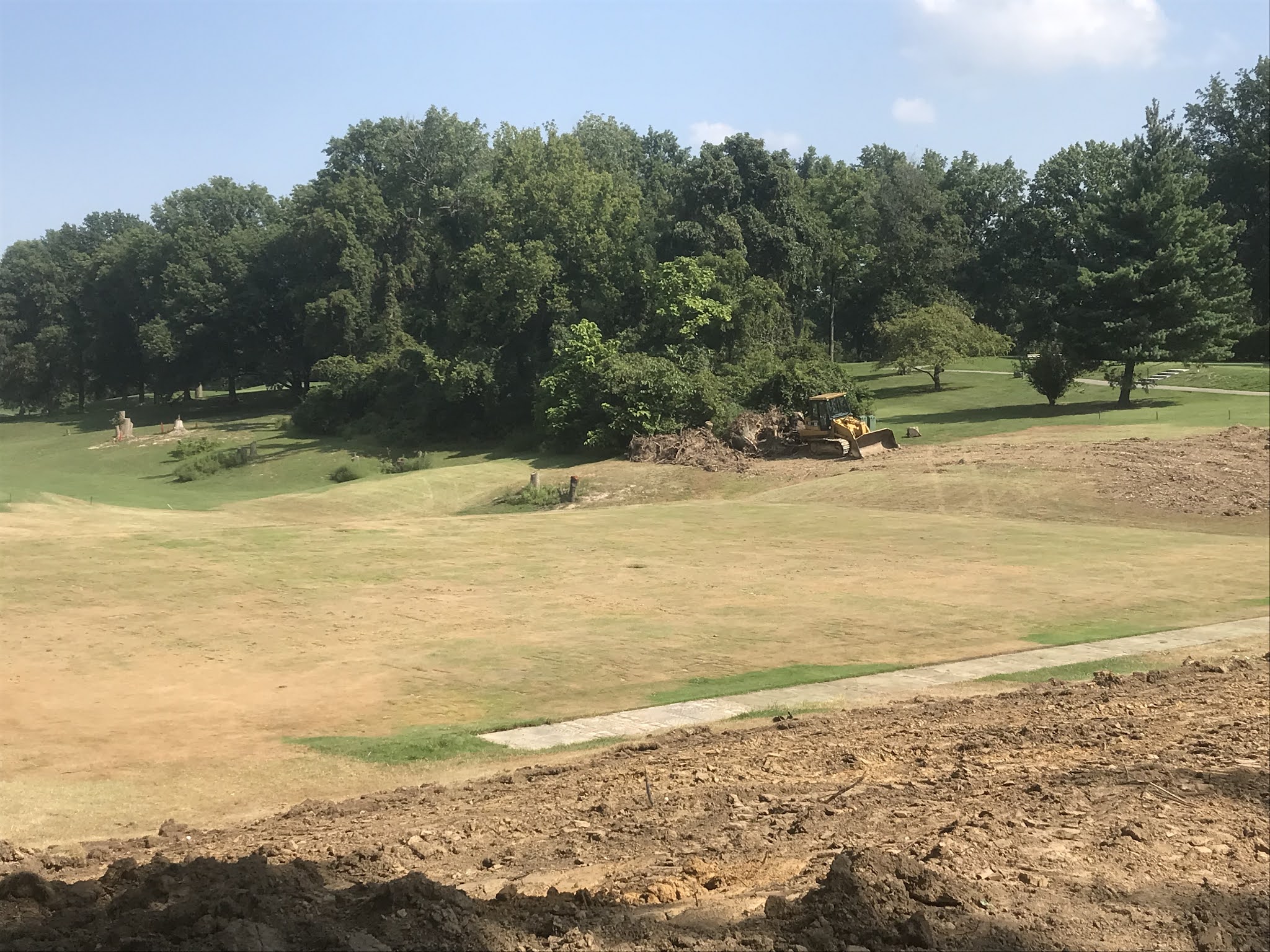
 The race is on to get the driving range project completed and seeded by mid to late September. So far things have been running along as planned. The glyphosate application was accomplished on August 16th. Then the irrigation heads were removed, point of connection areas cut and capped, mats moved to the far practice tee, and signs and tee plates taken out. Next ,Russ Macke (Contractor) began shaping the chipping green and new practice tee area. Currently, the chipping green is formed, the back of the practice tee is shaped, and the parking area is in the process of being formed. The drainage pipes and fittings have arrived and we are working on installing drain lines in the chipping green and surrounds. 

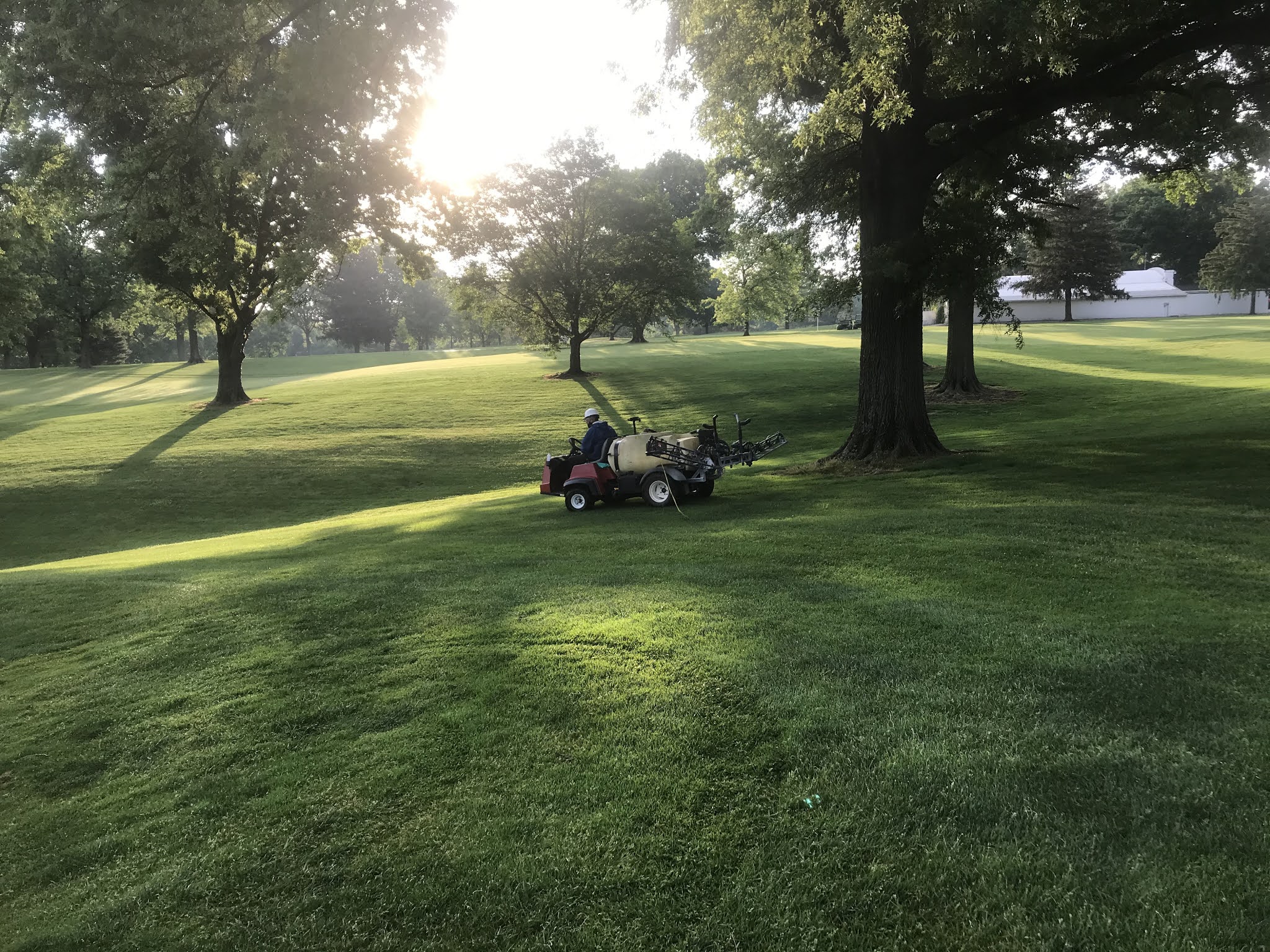
Chris Wheeler spraying the old practice tee area

Glyphosate working


Old tee mix stripped

Drainage on new chipping green

Raymond and Wilfredo digging out a green drainage trench

Next up will be adding greens mix to the chipping green base and forming/smoothing out the front part of the driving range tee. Also, after labor day, the floor of the driving range will start its makeover with a fairway pattern and target greens created. Once the areas are completely shaped, all drainage installed, and mix added, Leibold irrigation will be on site to install the new irrigation pattern. Tentatively, that should happen the week of September 13th. Fingers crossed that Mother Nature, labor, and material deliveries all cooperate and keep this project on schedule!

Green drainage installed


On the golf course maintenance side, the current weather pattern has stressed out the cool-season grasses immensely. Three weeks ago the temperatures were hot and dry, causing us to scramble during the member/guest tournament to keep turf alive by hand watering and utilizing the irrigation system. The next week brought on rain with hot and humid temperatures. The hoses were quickly replaced with spray rigs to keep as much grass disease free as possible. The crew has done a great job keeping high impact turf areas alive, but some of the deep rough has been decimated by Mother Nature's scorching late summer stretch. Spray applications of the deep rough areas are not in our current maintenance schedule due to its size, its minor importance to playability, and budget constraints.
 
Cool-season grass ideally likes temperatures between 65 and 80. Once the thermometer crosses into the 90 degree range during the day, and 70 degree range at night, the turf becomes really stressed and it becomes a catch 22 for the agronomy team. With humidity low and recent rainfall scarce, the evapotranspiration rate increases causing the plants to become dry. Watering is then imperative and difficulty arises when trying to keep adequate moisture in the ground before evaporation and transpiration rob the supplemental watering. When humidity rises or rainfall becomes abundant during hot temperatures, disease outbreaks take place. This hot, moist environment is ripe for devastating summer time diseases, such as Pythium blight, brown patch, gray leaf spot, summer patch, dollar spot and anthracnose. The only remedy is applying expensive plant protectants to prevent the pathogens from entering the turf. If the disease has already taken hold curative measures can be taken, although preventative applications are far more effective. Once nighttime temperatures cool down to the low 60s the turf will begin to recover; however, until then the stressful conditions will continue to wreck havoc on the turf and crew.
Pythium blight mycelium

Pythium damage in #17 deep rough

Dollar spot on #8 tee


Some of the maintenance practices that took place during the early season are showing beneficial signs. The root pruning done in January has kept many of the fairway areas, as of now, alive.  In the past, outside fairway areas were the first to go during stressful periods because of competing tree roots. The root pruning in these areas has kept this stressor at bay; resulting in healthier turf.

Jarred Wherekamp root pruning #1 fairway in January

Root pruning having a positive effect on #16 fairway. Notice the line between green turf and brown turf right at the short rough and fairway intersection. That was the location of root pruning last winter.

Tree roots by #6 tee stressing out the poa annua on the tee. This was not root pruned.


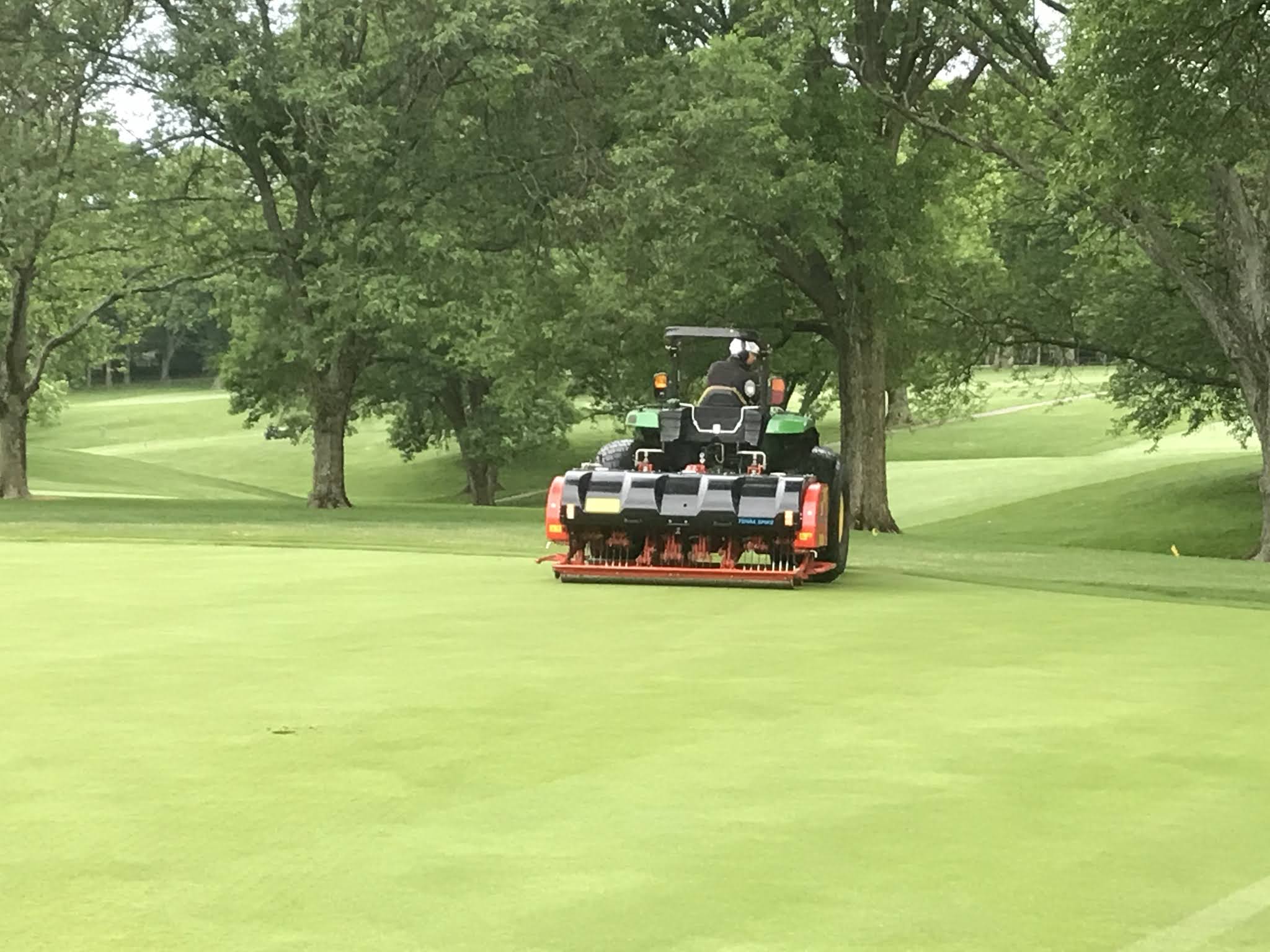
The verticutting along with core aeration has started to decrease the heavy amount of fairway thatch accumulation, allowing roots to grow deeper into the soil profile. On the greens the light and frequent topdressings along with other sound cultural practices has kept them in great shape throughout the toughest time of year.

#6 approach and fairway during the member/guest tournament. Looks healthy

Despite applying preemergent herbicide in April for goose grass and crabgrass control, by the late summer/early fall the protection from these weeds decreases. Once these grassy weeds spring up there is only a couple options for post-emergence control. Pylex (topramezone) is the best chemical for post control. When Pylex is sprayed onto the weeds they turn a bleached, white color before dying off. You may notice the bleached patches out on the course as we eradicate these late summer invaders.

Pylex herbicide control of hard and soft crabgrass. In the picture above Dallas grass (brown patches) is also being sprayed with Dr. Dave Gardener's (Ohio State Professor) concoction of 1/2 rate of topramezone and a 1/2 rate of quinclorac

Pylex applications


Overseeding of some dead patches of rough will take place in September once the temperatures cool down. Fall aeration is on the horizon with September 7th scheduled for greens aerification and fairway/tee aeration will soon follow. Of course fall fertilization won't be far behind. In the next couple of weeks, the lightning struck tree by #7 will be removed and the tree by #9 will be pruned and treated to keep it alive for as long as possible. As many of you can see we have a packed end of the season work load. Updates will continue to happen as everything moves forward- hopefully at a quick and uneventful pace!

Brad Piecuch
Grounds Superintendent

Saturday, July 17, 2021

Bugs and Lightning and Projects, Oh My!

The annual bluegrass weevil has been detected at many golf courses around the Tri-State area over the last couple of years and now we can add Western Hills Country Club to that list. ABW was first discovered in the northeast in the 1930s and over the last 90 years has typically only been a problem in that area of the country. However, they have now made their way to the Mid-West. 

Annual bluegrass weevils are small black beetles that cause significant damage to turf specifically annual bluegrass (poa annua) and bentgrass. They feed on grass blades and crowns. The damage begins as small yellow patches in the grass that turn brown later in the season. They cause significant plant desiccation and can wipe out big areas of turf in a season. This insect was detected around some of the green collars and we are applying insecticides to control this pest. We will continue to scout for this insect and treat when/where appropriate. 


Annual Bluegrass Weevil adult and larva.

Early ABW damage on #7 collar

ABW larva found on #7 collar


 After below average rain for the months of March, April, and May; June and July have been above normal. Our weather station has recorded 9" of rain from mid June to mid July, and we stand about an inch above normal for the year. All of this rain was great for giving our irrigation system a rest, but it kicks our spraying program into overdrive. We have been decreasing our spray intervals to stave off the summer-time diseases such as pythium blight, summer patch, brown patch, anthracnose, and dollar spot. Also, our plant growth applications have increased, especially on our green's spray program, to keep growth in check. This along with topdressing and verticutting has, so far, kept our green speeds consistent throughout the early summer months.

Now, heading into the latter part of the month, the dry, humid summer weather has replaced the tropical monsoons. The abundant amount of poa annua that permeates the golf course is showing signs of stress. When soil temperatures get above 95 degrees this grass plant taps out until cooler temperatures return. The other cool season grasses such as bentgrass, ryegrass, and to a lesser extent fescue, struggle as well, during these hot and dry days. Watering becomes difficult when the evapotransporation rate increases and sometimes we have to water multiple times a day to maintain proper moisture levels. You will also see us handwatering many localized dry spot areas. We will continue to do everything we can to keep turf alive during the hardest time of year to grow cool season grass; however, even with our best efforts some turf will be lost. 

Irrigation precipitation report from the WHCC weather station for June 17th to July 17th.


Golf cart damage #11 after driving over stressed turf during a hot summer afternoon. This is why "rough" days need to be implemented.


Death of cool season grass due to summer heat

For the Fourth of July, mother nature provided her own firework display and dropped lightning strikes like bombs around the golf course. Two pin oaks located by #7 green and #9 green got struck. The strike was so powerful that the bark on #7 pin oak blew over the green and into the fence across the cart path. Our irrigation system did not take the lightning well either and we had a couple computer boards fried and many blown fuses to replace. We are currently having both lightning struck trees being assessed by board certified master arborists to figure out if removal of these trees is warranted.

Lightning damage to #7 pin oak

Up close picture of #7 oak. 50% of the trunk’s bark may have been damaged. This will weaken the tree’s structural integrity over time and open up the cambium layer to insects, weather, and diseases.

There are many projects on the horizon with two projects currently taking place. A Verdin clock is being installed by #1 tee. The knee wall and pavers have been completed. Flowers were planted around the future site of the clock and the actual clock should be set in place by the end of August.

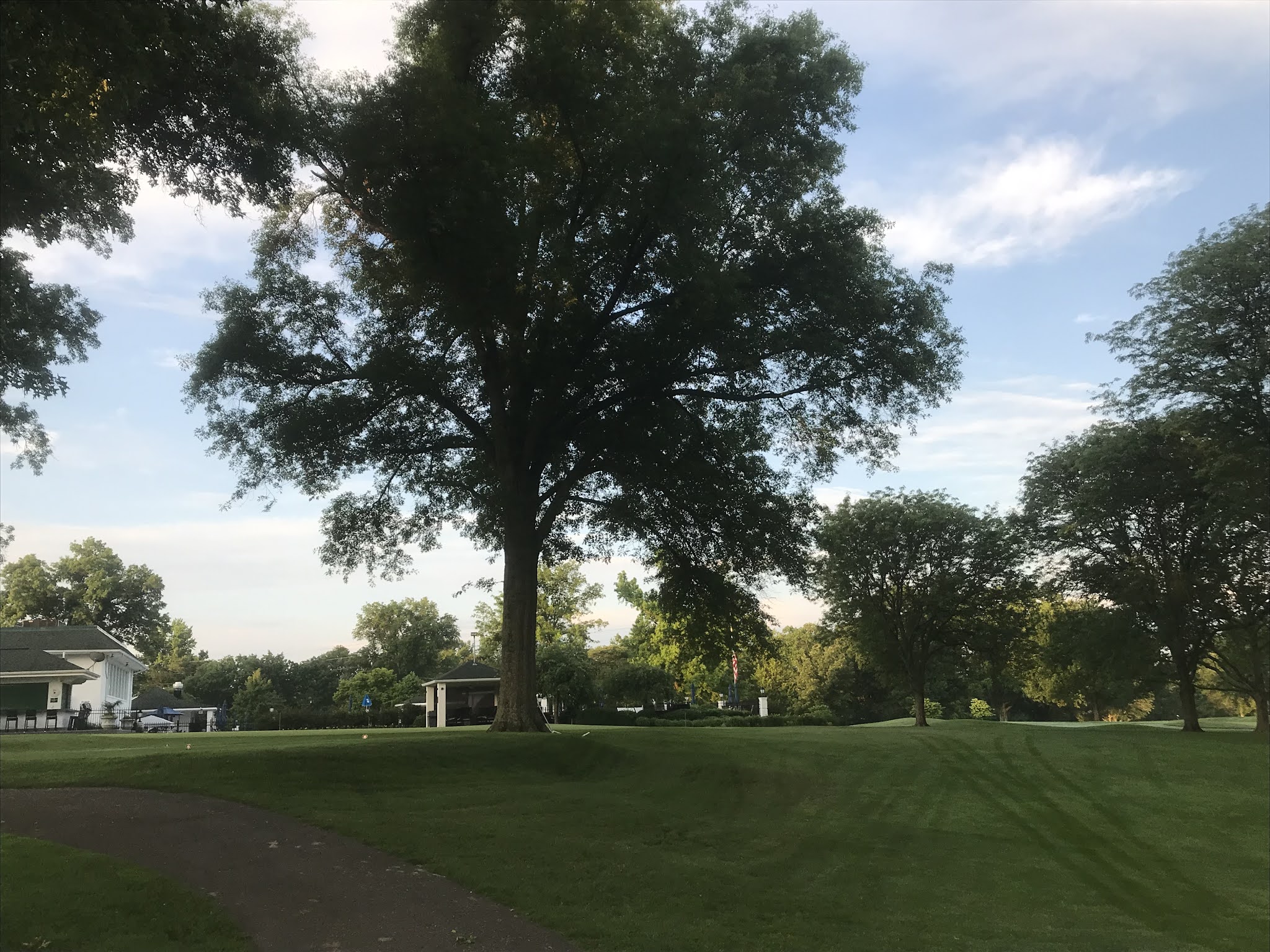
Also, lighting is being installed under the Ohio champion overcup oak tree. To protect this tree, an air spade was used to dig the trench for installing the light fixtures. If we would have dug the trench using a shovel or backhoe around 50% of this old oak's critical root area would have been lost, putting the tree under a tremendous amount of stress and ultimately leading to significant canopy die back or death. The use of an air spade kept the roots intact and the electrician was able to thread the wires bellow the roots for installation. Eight well lights were installed around the base of the tree. The lights are 120V fixtures with a medium base screw shell. They are manufactured by Coast 2 Coast lighting and are PAR 38 LED lamps, 30W (4000 lumens) with a 110 degree beam angel. The health of this signature champion overcup oak (biggest overcup oak in Ohio, and 6th biggest in the country) has been our #1 concern throughout this process and hopefully the lights will be enjoyed by all.
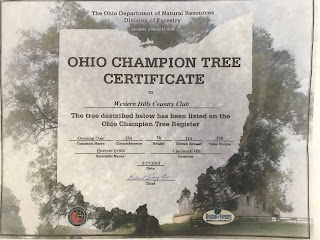

Champion tree designation from Ohio department of forestry 

Trench dug with air spade

Notice how the tree roots are still intact


Close up of lights in the early morning

Lights at night


Progress on Verdin clock project

The end of August will be the beginning of other big changes coming to WHCC. The driving range tees will be getting an expansion, a new chipping green will be added, and the putting green will be expanded. Brian Huntley is the architect for these projects and the grounds department is excited to be a part of these upgrades. The first step will be to remove 20 trees located in the driving range to make way for these improvements. This will begin sometime in late July or early August. Then, starting August 16th, the renovation will ramp up, beginning with the spraying of 2 acres with glyphosate, removing existing irrigation heads, and mobilization. The following week Russ Macke will begin shaping. After that mother nature, labor, supply chains, and any unforeseen problems will dictate the pace of the renovation process. This will be a big project with many moving parts. Irrigation will have to be relocated and added, areas shaped, drainage and gravel installed, cart paths added and relocated, and sod/seed installed before colder temperatures arrive. We hope to have this phase of the project done by mid-October. Phase 2 will occur next year on the south end driving range tee.

Another project currently in the works is installing drainage to greens #4 and #8 and raising up the right side of #13 green. We are currently talking to Golf Preservations about this project and hopefully this will take place as the driving range renovation is slowing down.

Brian Huntley's driving range renovation design

Putting green expansion

Leibold irrigation plan for new driving range

Since we may get bored in mid-fall when these projects wind down, we have decided to install a new golf cart building. It will house all of the golf carts and give us the current golf cart storage area. This will help us out immensely with storing the grounds equipment. Currently many of our expensive tractors are stored outside in the elements and having this area will allow us to place this equipment inside along with other important and expensive new equipment such as the new fairway verticutting unit. Other upgrades are needed for the grounds building including installation of a lift for better equipment access for repairs and maintenance, upgrading old lighting, and installing bins for grounds materials (sand, gravel, topsoil, mulch, etc.). The first step of this process was removing a big section of irrigation located parallel to the parking lot by #18, where the new building will be placed. In addition, the parking lot will be expanded where the current employee parking area is occupying. The irrigation located in this area was removed as well. The cutting/capping and sprinkler head removal was completed this week and is ready for the parking lot expansion that will take place in early August.

Irrigation area that has been cut and capped. Red lines are the capped locations.

There are many changes ahead for the WHCC grounds. I will continue to update as these projects take shape. We ask for everyone's patience during this exciting time. Many of our workers will be busy with projects in the next couple of months. We will continue to keep the golf course in great shape as the year progresses; however there may be days when most of the crew will be busy with renovation tasks and some daily maintenance might have to be overlooked. Fingers crossed that everything will go as planned and we are excited about the changes coming!

Brad Piecuch

Grounds Superintendent


Wednesday, June 2, 2021

Around the Grounds-June


 May is usually the busiest month of the year for the agronomy team and this year was no exception. Getting the spring annuals replaced with the summer flowers and mowing have been two of the most time consuming activities that have taken place. The tulips put on a great display and now have been replaced with many different flowering annuals. We are fortunate to have many girls working on our crew this year that are either enrolled in a horticulture related program, or are interested in the profession. They have been doing a great job putting together the summer display.

Purple verbenea and crotons

Starlight rose zinnia and elephant ears

Yellow lantana and Caladiums


 On the other hand, keeping up with mowing has been a tall task, especially after the grass explodes with growth coming out of winter dormancy and from fall/spring nitrogen feedings. We have been doing a good job keeping up with the mowing on greens, tees, and fairways. However, the rough is the biggest turf area we have on the golf course and occasionally after a rain event, it can get long and "rough." Most of March and April had been on the drier side, but once May hit, rain storms hit with more frequency. Rain hinders our ability to mow the rough without leaving tracks and tearing up areas of turf. Sometimes it is better to wait until conditions are drier rather than destroying grass. One day of not mowing makes us play catch up  for the rest of the week, and consequently the rough is higher than desired. Of course, there are times when multiple rain events coincide and we have to be aggressive and mow in wet conditions, but this is the exception and not the rule. We ask for patience during wet weather and understand that the rough may be a little higher than expected.

 The green's cultural practices have been running smoothly. Verticutting and light frequent topdressings have taken place since the beginning of the golf season. The new spinning topdresser that was purchased last year has allowed us to make lighter topdressing applications; increasing the green's firmness and the speed of the putting surfaces. Deep-tine aeration was accomplished on June 1st. Wehrkamp enterprises was used to aerate the greens using 5/16th inch solid tines and a heavier topdressing was applied after. The tines were small enough that the impact on golfers should be minimal and aerating this late in the spring season will help the greens get through the hot, dry summer weather. 


Aerating of the putting green

Putting green after a heavier topdressing

Verticutting a green

Lightly topdressing after verticutting

Tree work has been accomplished around the putting green and #1 and #6 tees. The pin oak next to the putting green collar has been removed due to the putting green expansion project taking place in the late summer. The two pin oak trees by #1 tee and #6 tee had dead wood and low limbs taken out for safety concerns and to improve visibility while looking at the course from the patio area. Finally, the pin oak by #1 tee received a cable to support its co-dominant branch structure.

Pin oak by putting green before removal

Tree company at work 

Putting green area after pin oak removal

Pin oak behind #1 tee trimmed/pruned and a cable inserted between co-dominant branches


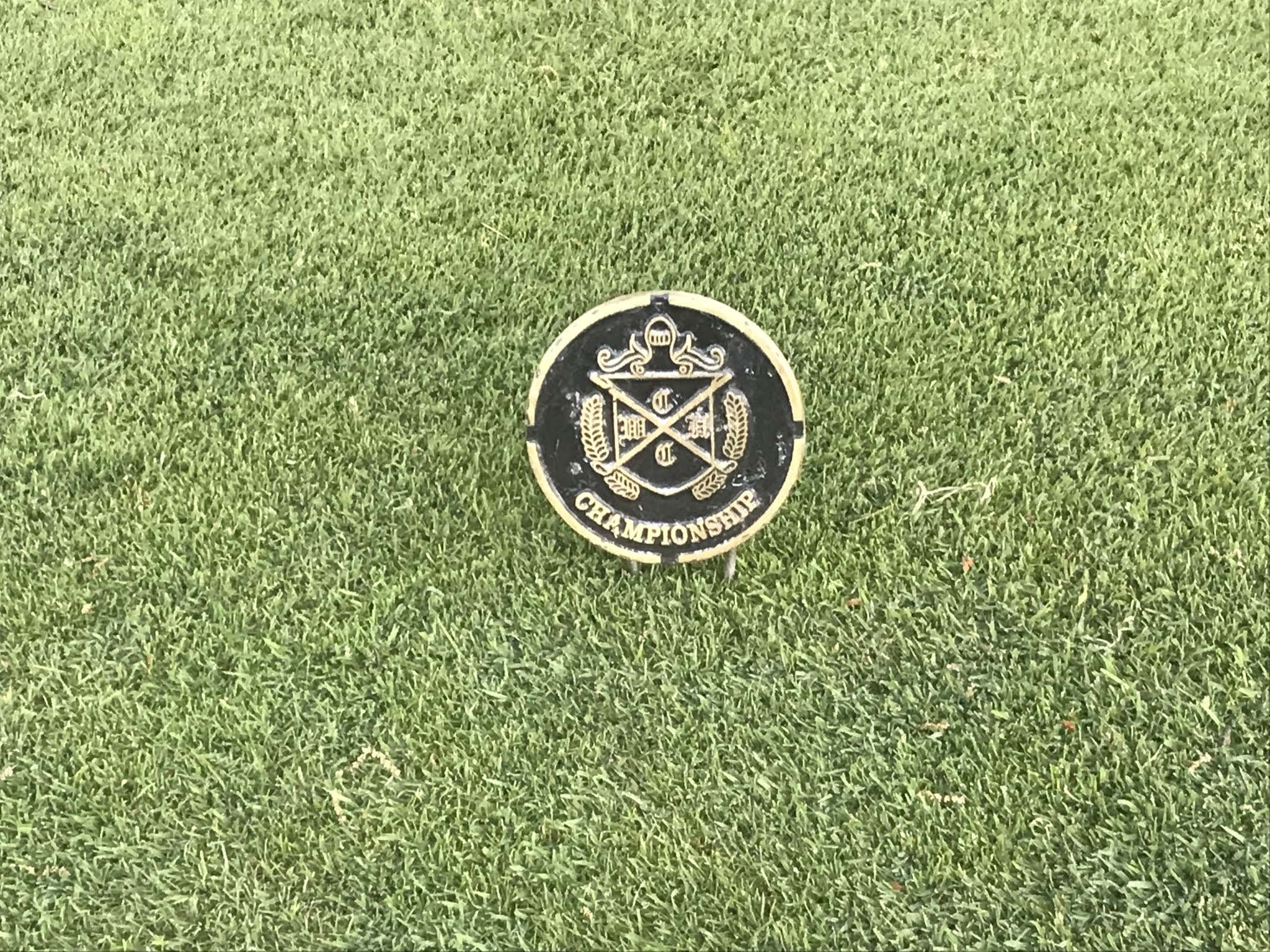
New tee markers have replaced the 25 year old markers that were showing their age. The new markers were designed, deliberated, and eventually approved by two different committees and departments. The updated design reflects the Country Club's current logo, and they are colored for easier recognition of which tees to play from, especially for guests. These markers should last for at least another 25 years.

Old tee marker with old logo

New blue combo tee

New black (Championship) tee

The cicadas are out in full force. The male's serenading music is almost deafening at times and dead cicadas are dotting many of the greens, especially ones underneath trees. The females are just beginning to deposit their eggs in tree branches so it may be another month before we see any signs of tree damage. 


Herbicide applications are being applied to rough, fairway, and tee areas to decrease the amount of broadleaf weeds on the golf course. Clover is not an easy weed to eradicate and persistence is the only chance of decreasing it. We will continue to make herbicide applications until the weather gets too hot and herbicide spray is not recommended.

Rough herbicide application

Currently, labor is an issue in many industries. The landscape/grounds industry has not been spared and it has been extremely difficult recruiting and hiring the right employees. The old way of most employees working full-time hours seems to be a thing of the past. The majority of the newer generation workers and the older, retired generation workers want flexible, part-time work. So to attract more interested employees, and to meet this limited working hours demand, we have increased our seasonal part-time staff by 100% (from 10 to 20). This requires more training, but gives us the opportunity to sub workers in when others are off or on vacation. I'm not sure if this is a trend that is here to stay or Covid related, but the Grounds Department is adapting to the changes and is getting work accomplished. We just ask for patience as we delve into this uncharted territory.

There are many projects on the horizon including landscape lighting to illuminate the Champion overcup oak tree, and cart path repairs. I will continue to update as these activities take place. 


Brad Piecuch

Grounds Superintendent