Friday, March 20, 2020

Marching Forward!

Saucer Magnolia in full bloom


We have entered the end of March and spring has definitely sprung. The tulips are growing bigger by the day, the daffodils have begun to bloom, the first flowering trees are showing beauty, and the spring time thunderstorm monsoons have once again graced our presence. Yes it is looking like a normal spring on the WHCC grounds, except for one tiny little thing.........can't put my finger on it.......oh yeah, we are in the midst of the biggest pandemic to hit this country in over a century! I have to steal a quote that our General Manager used the other day to describe the current situation. In the words of Ron Burgundy, "Boy, that escalated quickly. I mean that really got out of hand fast." Well that about sums it up. As I'm sure everyone can relate to right now our situation changes by the day. Currently we are continuing to accomplish grounds maintenance but we are spending more of our day sanitizing doorknobs, eating areas, equipment, carts, and computers. Luckily working outdoors makes it easier to practice physical distancing, but we are all getting accustomed to having hand sanitizer close by. Also, we are working closely with the golf professionals to lower the exposure risk for every golfer on the course. First we are raising the cups about an inch above the surface so when the ball hits the cup it is considered a sunk put and can be picked up. This will limit the possible virus exposure a golfer would have with the flag stick and inside the cup.

Raised cup on #18 green

Other measures that are being utilized to reduce potential exposure are removing all the bunker rakes, the sand buckets located throughout the course, par 3 tee boxes, and all ball washers. Golf remains one of the best sports to play in these conditions especially if one walks and maintains a 6 foot distance from others. 

Another way to beat the quarantine blues is to, simply, get outside. Take a walk and enjoy mother natures' spring-time beauty or work out in the garden. In the coming weeks the Country Club will be coming alive with blooms. Also, this may be a great time to start a home vegetable garden. Cool-season vegetables such as pees, broccoli, and lettuce can be planted now.  Summer vegetables can be started from seed indoors and will be ready to plant outside by early May.

Being a plant enthusiast and thinking about the precautions that are being taken to combat Covid-19 disease, I am reminded of the disease triangle model that shows interactions between the environment, the host, and an infectious agent in both plants and humans. Take away one of these entities and the disease will not survive. As plant pathologists we are constantly referencing this triangle to maintain healthy turf, shrubs, trees and flowers. For example, rose black spot disease has to have a susceptible rose, the black spot bacteria, and a warm humid environment to cause infection. By planting a resistant variety, one of these items (the host) is taken away and the disease is suppressed. Similarly, the grounds department (and everyone else) is combating Covid-19 by killing the SARS-CoV-2 virus (the infectious agent) by sanitizing and hand washing, and practicing physical distancing (taking away the host) to limit the spread. Hopefully, a hot summer environment may also help in destroying this virulent pathogen. For more information about the plant disease triangle click here for an interesting article from Ohio State University.


Image result for disease triangle for plants


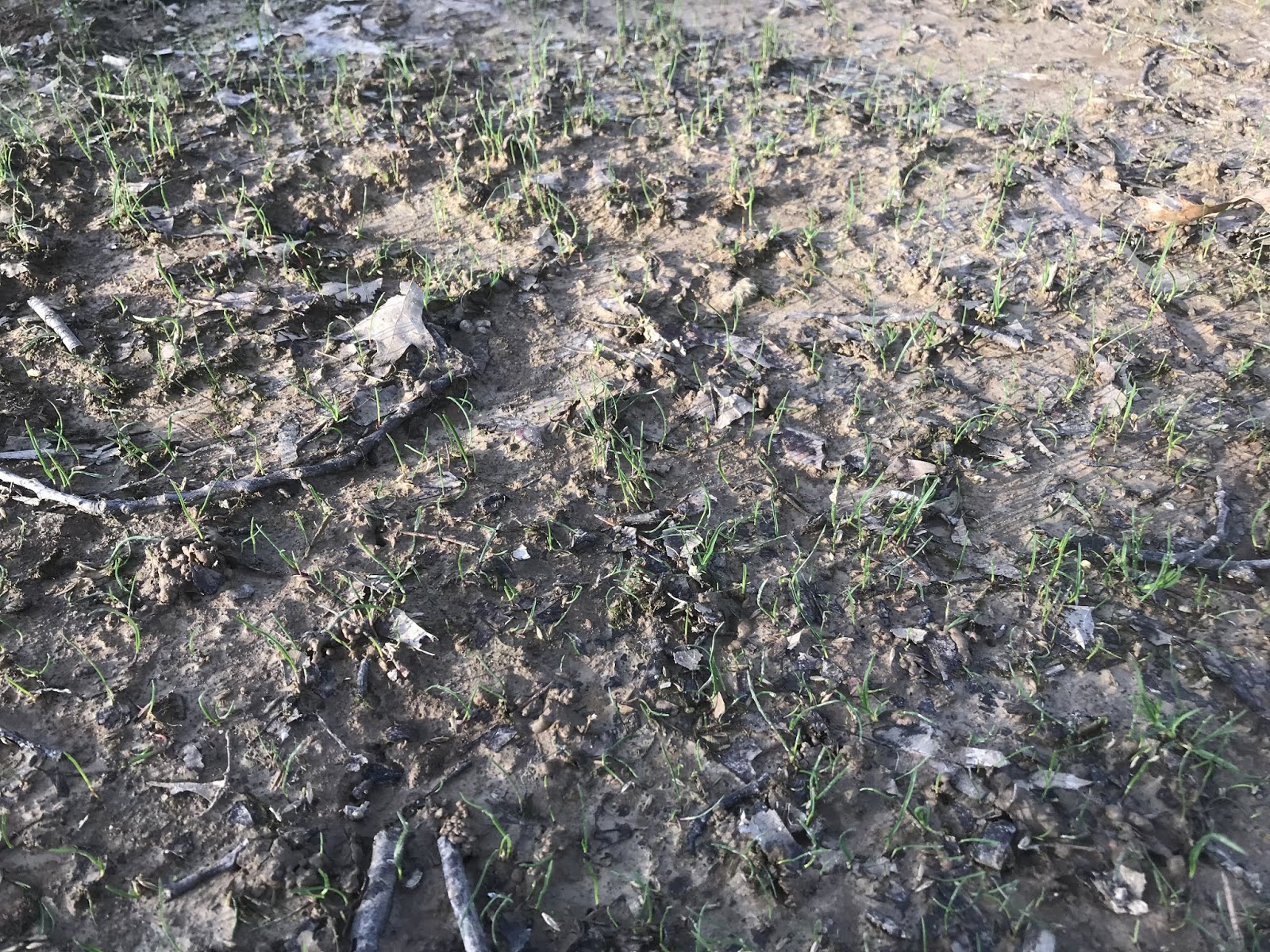
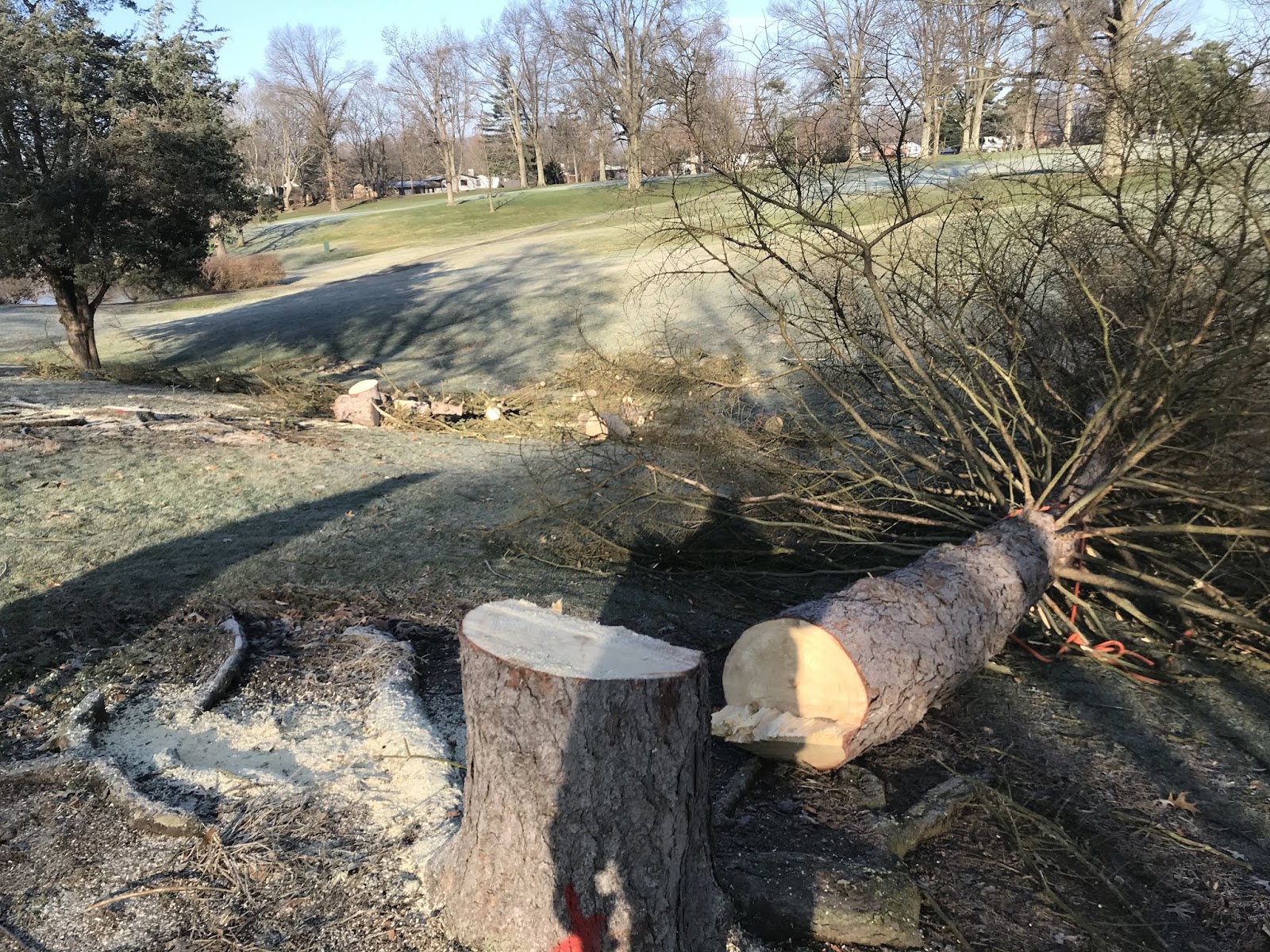
Outside fighting the current pestilence the grounds department has been getting projects and maintenance accomplished. The gravel cart path that existed in between #11 green and #10 tee has been removed and replaced with new fescue sod. Also, sod was laid in other bare areas located throughout the course. The winter tree work has been completed. The stump grindings are being removed and replaced with soil and sod or seed. In addition, we put down over 1,000 lbs of fescue seed scattered throughout many rough areas and it is starting to germinate.


Excavation of #11 gravel path

New sod installed on #11

Sod added to the bare area by #4 tee

Stump grinding hole sodded


Fescue seed starting to germinate in between #15 and #16


The irrigation system has been turned on for the season. We were lucky that most of the digging that was done to replace the main water line for the clubhouse caused minimal damage to the course irrigation system. Other issues that needed to be addressed such as replacing the defective vertical distribution board in the #7 satellite box, fixing broken sprinkler heads, and updating the Lynx irrigation system to the newer program have been accomplished.

Replacing the vertical distribution board

Starting up the irrigation system

The mowing operation has begun. Greens, tees, and fairways have been mowed multiple times and the mowing frequency is increasing. Soon we will be mowing greens daily. The far practice tee will open on April 1st and we have been mowing and fertilizing so it will be ready for play.


The landscape department has started the process of cleaning out beds, cutting down perennials and mulching. The daffodils and tulips are beginning to bloom.


Tulips blooming by the front of the clubhouse.

Freshly mulched bed behind #11 green with daffodils beginning to bloom.


The daffodils blooming a week later


Cornelian cherry dogwood blooming


A tree that is very easy to spot this time of year is the callery pear tree. They are native to Asia and were originally brought over because of their resistance to fireblight disease. They quickly gained popularity because of their gorgeous spring white blooms, beautiful fall color,  and their ability to grow in tough environments. Originally considered sterile trees, over time, small fruits started to form and soon birds deposited the seeds throughout the landscape. Now callery pears are invasive and can be seen growing in woods and fields all over the tri-state- an example of a good tree gone bad! (for more information read this article by Ohio State University)


A callery pear in bloom by the driving range.

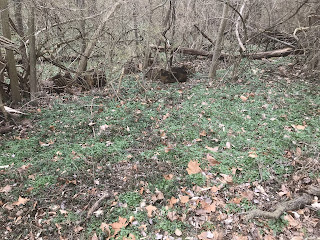
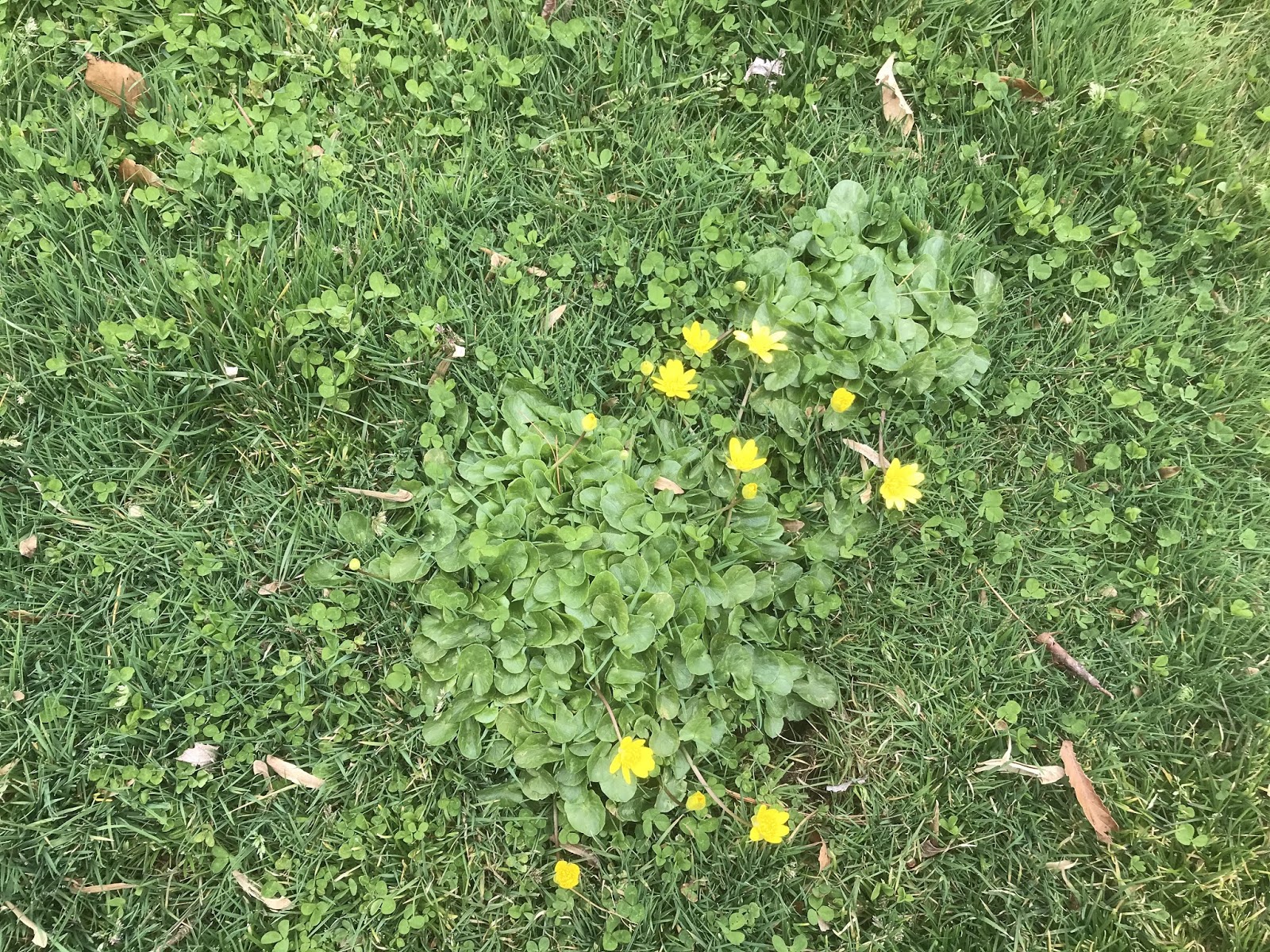
As the grass grows so does the spring time weeds. Lesser celandine is an invasive early spring weed that is becoming much more common in the tri-state area. In the next couple of weeks the agronomy team will begin to apply herbicides to limit its spread.
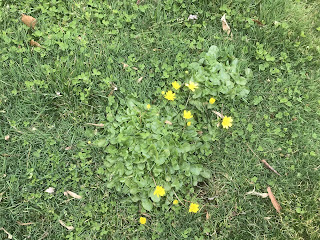
Lesser celandine

Lesser celandine taking over the forest floor by #4 tee area

The Grounds Department will continue to march forward with springtime jobs as long as the current situation allows. Our hopes and prayers are that this pandemic is resolved soon. In the meantime listen to your mother-eat your vegetables, say your prayers, and wash your hands!

Brad Piecuch
Grounds Superintendent

Wednesday, February 19, 2020

What season is it?

 I'm not sure if it was the 95 degree day in early October, or the 8 degree morning in early November, or the fact that we ate Christmas dinner in short sleeve shirts outside on my mother-in-laws patio, but I'm having a hard time figuring out what season it is. This year fall and winter seem to be producing the same roller coaster temperatures. With the exception of one week in January, where it was 34 degrees for the low and high 7 days straight, mother nature can't figure out the calendar. As I write this the GDD (growing degree days) for Western Hills stands at 37 days. Silver maples (the first trees to bloom) have their first blooms at 34 growing degree days so, technically, spring has already sprung. However, the forecast is calling for old man winter to make another appearance putting spring on a brief hold. These big temperature swings have made this winter a challenge for the Grounds Department. The winter work has been getting accomplished in between mowing, course setups, and monsoons. Yet, we are making progress and the tree work is inching closer to completion. The big trees were taken down by a tree company in January and we will finish up with the in house tree removals and pruning in the next week. After removals are accomplished, the remaining stumps will be ground up, grindings removed, dirt added, and completed with either seed or sod.


In house tree removals and pruning

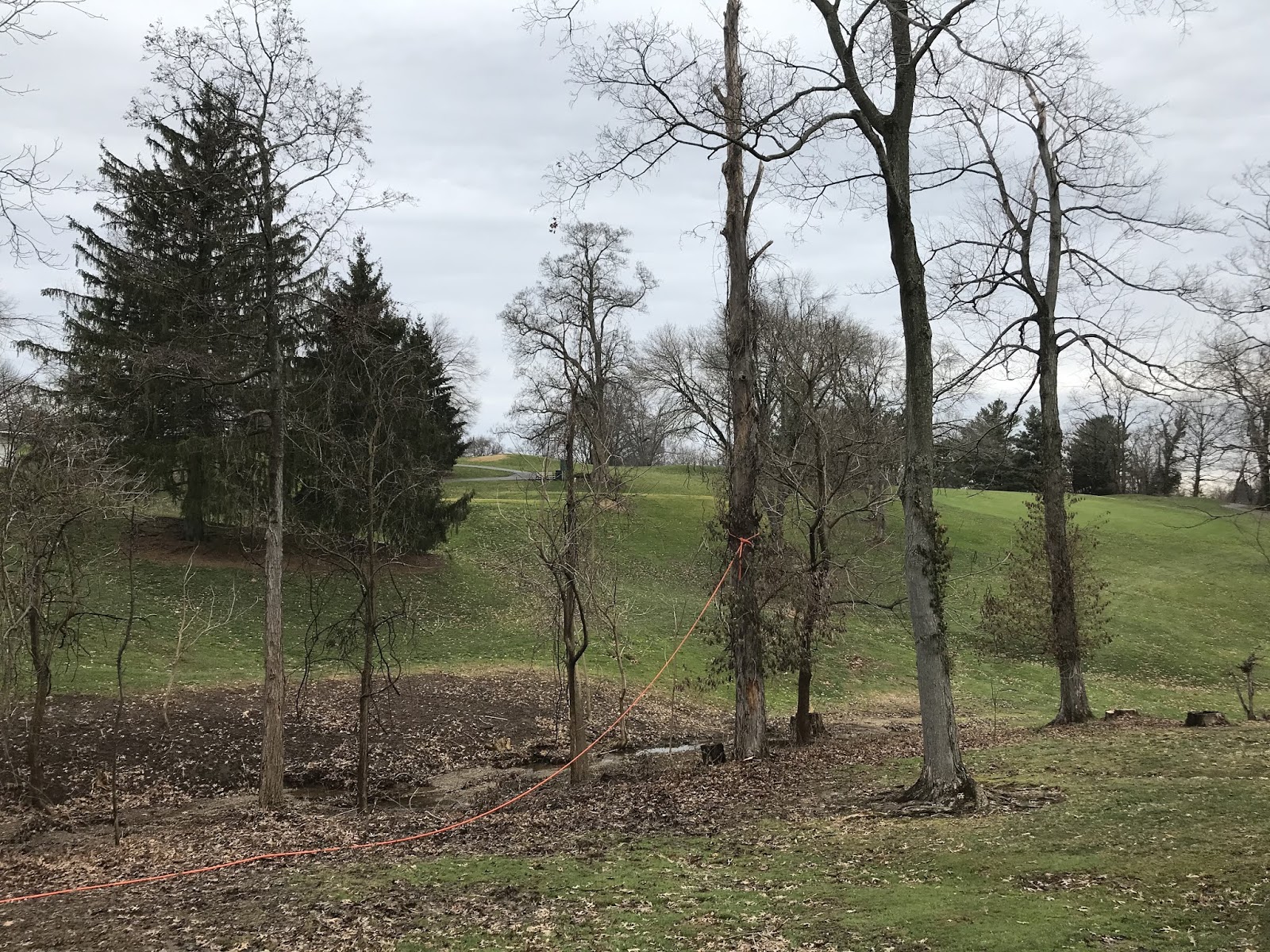
Felling black locust by #7 lake

Two blue spruce trees removed in between #8 and #9

Felling of dead hickory tree in between #17 tee and #15 tee

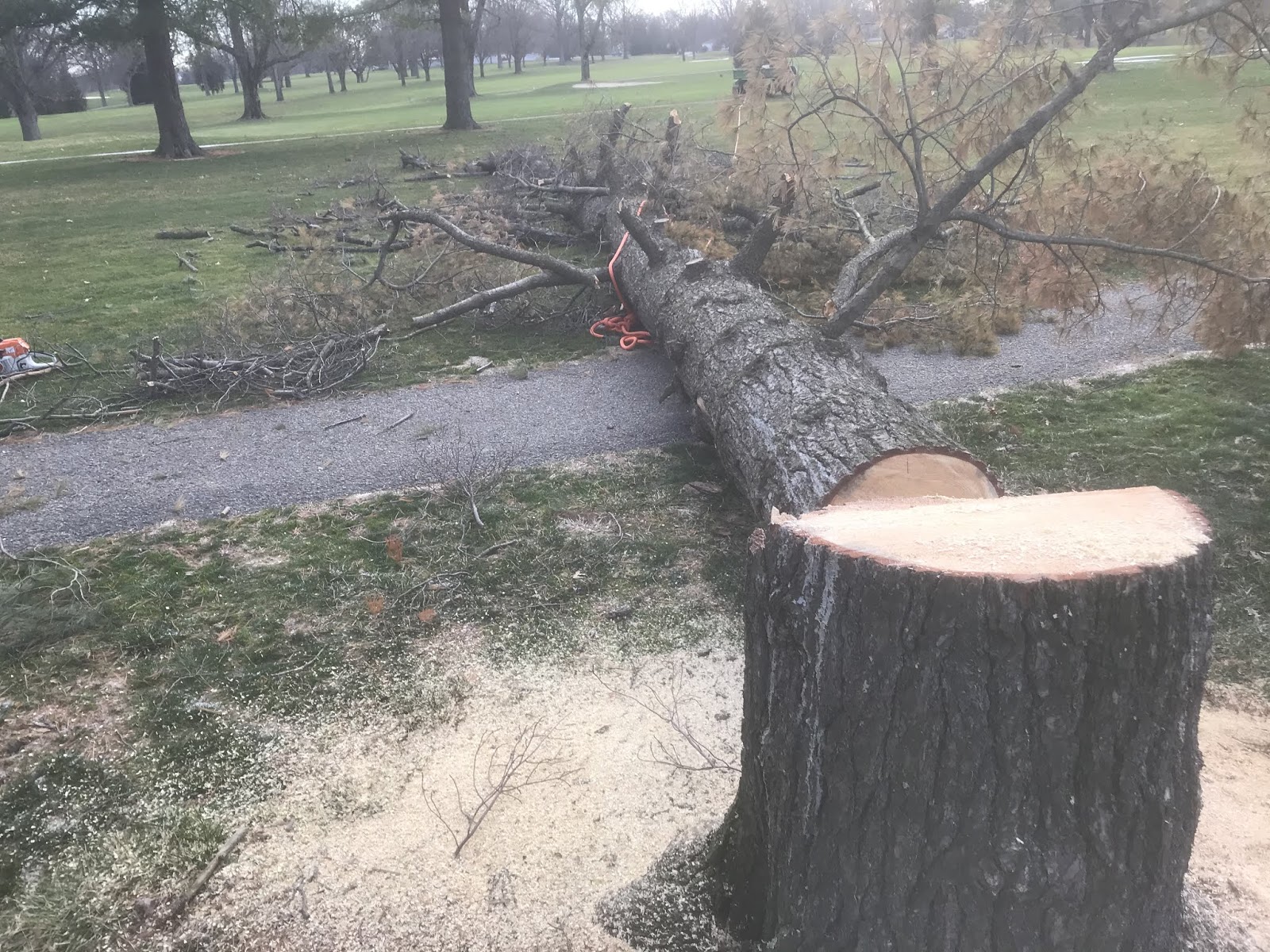
Hickory tree down

Felling of white pine killed by a lightning strike

Ash tree to the left of #16 fairway pruned back to help with iron shots 


 The area in between #17 tee and #15 tee has taken much of the Grounds Department's winter time. The honeysuckle and debris in that area has been removed. The next step is to have the tree stumps and honeysuckle stumps ground up and cleaned out. This work has opened the area and given it a much cleaner appearance. 

Honeysuckle removed


 The railroad tie steps on #9 and #18 were replaced with limestone by Hafner Landscaping. We have some sodding, mulching, and cleanup work that needs to be accomplished around the steps but the new limestone looks great and should last for years to come.


Old railroad tie steps #18 tee


New limestone steps #18 tee

#18 tee

New limestone steps #9 tee

#9 tee


 The Green Committee along with the Green Department have assessed and agreed upon the worst cart path areas that need repairs. The repair process will take place as time and budget constraints allow.

Cart path repair areas


 Currently, landscape designs are being completed. The area by #13 tee has been approved for a makeover. A perennial/wildflower garden will be created parallel to #13 tee and behind #12 green. Right now the area is not in use and the garden will not affect any golf shots. It will consist of perennials such as, yarrow, shasta daisies, black eyed susans, swamp milkweed, asters, phlox and many others. This area will become a beautiful garden that will attract song birds, monarch butterflies, and pollinators. It will add color and beauty to an underused location. So be on the lookout for this improvement as spring progresses. 

New landscape area by #13 tee


 As the calendar switches to March dormant seeding will take place to improve the stand of grass in some rough areas. This time of year is a great time for seeding due to the freezing and thawing temperatures, its proximity to consistently warmer temperatures, and the copious amount of rainfall that usually occur. A shade mix seed will be utilized in heavy tree lined locations and a tall fescue/perennial rye mix used in sunnier spots.  Other spring jobs will include adding fresh sand to bunkers, trimming bunkers, edging and mulching landscape beds, and beginning the consistent mowing and course set up operations. Hopefully mother nature will get back in sync and we will be in a normal spring blooming season soon.  

Brad Piecuch
Grounds Superintendent


Saturday, January 11, 2020

Parkland Style Course


Trees and Turf

 It may be a surprise to some people that trees and turf don't mix-in fact, they are natural competitors. Think about a dense forest. The trees are growing in close proximity with a dense shade canopy and little light penetrating the surface. Rarely is grass growing in this environment. Conversely, think of a grass plain, with small rolling hills of prairie grass, where little, if any trees are growing within. This is by design and each plant's survival strategy is distinctly different. A tree survives by growing tall with a big canopy and large roots. The canopy shades out competition and the large roots win the battle for moisture and nutrients. On the other hand, turf survives by growing close together and choking out the tree saplings before they take root.

 Also, grasses can survive drier/drought areas by shutting down photosynthesis and going into a dormant state, while trees do not have this capability, and without supplemental watering, will show decline immediately or in the proceeding growing seasons. This is why forests usually occur in high rainfall areas. Further, many grass and tree species transmit chemicals from their root systems to inhibit the growth of the other. For example, some types of fescue produce a chemical that inhibits growth of young trees, while walnut trees have been known to produce a chemical that inhibits growth for grass and small vegetation. In addition to the biological differences the way each plant is maintained is unique. Trees require deep and infrequent watering with precise and limited fertilization, while well maintained turfgrass requires light and frequent irrigation with heavy fertilization. Add in the damage done to trees by canopy raising, cart traffic, mower damage, and frequent knocks from flying golf balls and you have a recipe for a difficult situation for tree survival on golf courses.

 At WHCC we have a parkland style golf course. The trees on the golf course have many benefits including: providing shade for golfers, providing safety from errant golf shots, contributing to aesthetic beauty, adding natural habitat for local animal species, and helping to improve local air quality (turf also improves air quality and some debate that it does even better than trees). However, Western Hills Country Club is a golf course and not an arboretum. If it were the latter we would maintain the grounds much differently beginning with 40 foot mulch rings and entire areas blocked off for tree health and vigor along with many other different cultural practices. Since turfgrass is the courses' number one asset it takes precedence over trees, especially in high impact areas. The negative effects trees have when planted in close proximity to putting surfaces has been well documented (click here for more information from the USGA!). Also, trees produce a significant amount of debris that takes a weighty part of our labor budget to eradicate.With this in mind we have chosen to cut down some trees, recommended by the USGA agronomist during his visit last May, that contribute to declining turf health around high impact turf areas (ie. putting greens, collars and approaches).

 We are not now, or in the future, going to cut down all the trees on the golf course. Trees are a big part of what makes the WHCC experience so unique. Yet, we are trying to improve areas of our playing surfaces by increasing turf health which will decrease the amount of inputs needed and help to make the golfer's game more enjoyable.  In order to accomplish this we need to take a both/and strategy and be smart about what kind of trees we plant and where we plant them. For example, the Kentucky coffee tree is a good native tree to plant in remote rough areas because of its thin canopy that allows more light for the underneath grass to consume.  Another example would be planting redbud trees as a backdrop for a green because of their short stature and smaller root system. Planting pin oak trees, that get over 75' tall, very close to a green's collar is not a smart or efficient idea for maintaining a high quality putting green. The majority of the trees eradicated in the winter are trees that are dead or diseased (written about in a previous post). Currently, we have only two healthy pin oaks trees that were removed because of turf quality.  By eradicating some of the problem trees and planting better species, in proper places, we will be more able to accomplish our goal of maintaining the parkland style look of WHCC.

For more information about trees and turf click here for an article by the University of Kentucky.


Weak and thin turf caused by the row of pin oak trees to the right of #18 green


Maintenance Update

  The warm winter weather has caused the grounds department to continue mowing into January. We have been mowing the greens, approaches, and fairways several times in the last month. It has also allowed us to continue to sod bad areas located throughout the course such as spots on the practice tees, the raising of low fairway areas, and fairway areas where mowing and/or cart damage has occurred.
Raising of the catch basin in #18 fairway


  Other projects being accomplished are the eradication of the honeysuckle located between #15 and #17, the replacement of some defected irrigation heads, tree removal, equipment maintenance, leaf removal, and limbing up of low branches.

Removal of blue spruce tree infected with rhizosphaera needle cast disease

Thick honeysuckle between #15 and #16

Removal half way accomplished

The new MT52 mini track loader making the pickup of ash wood much easier

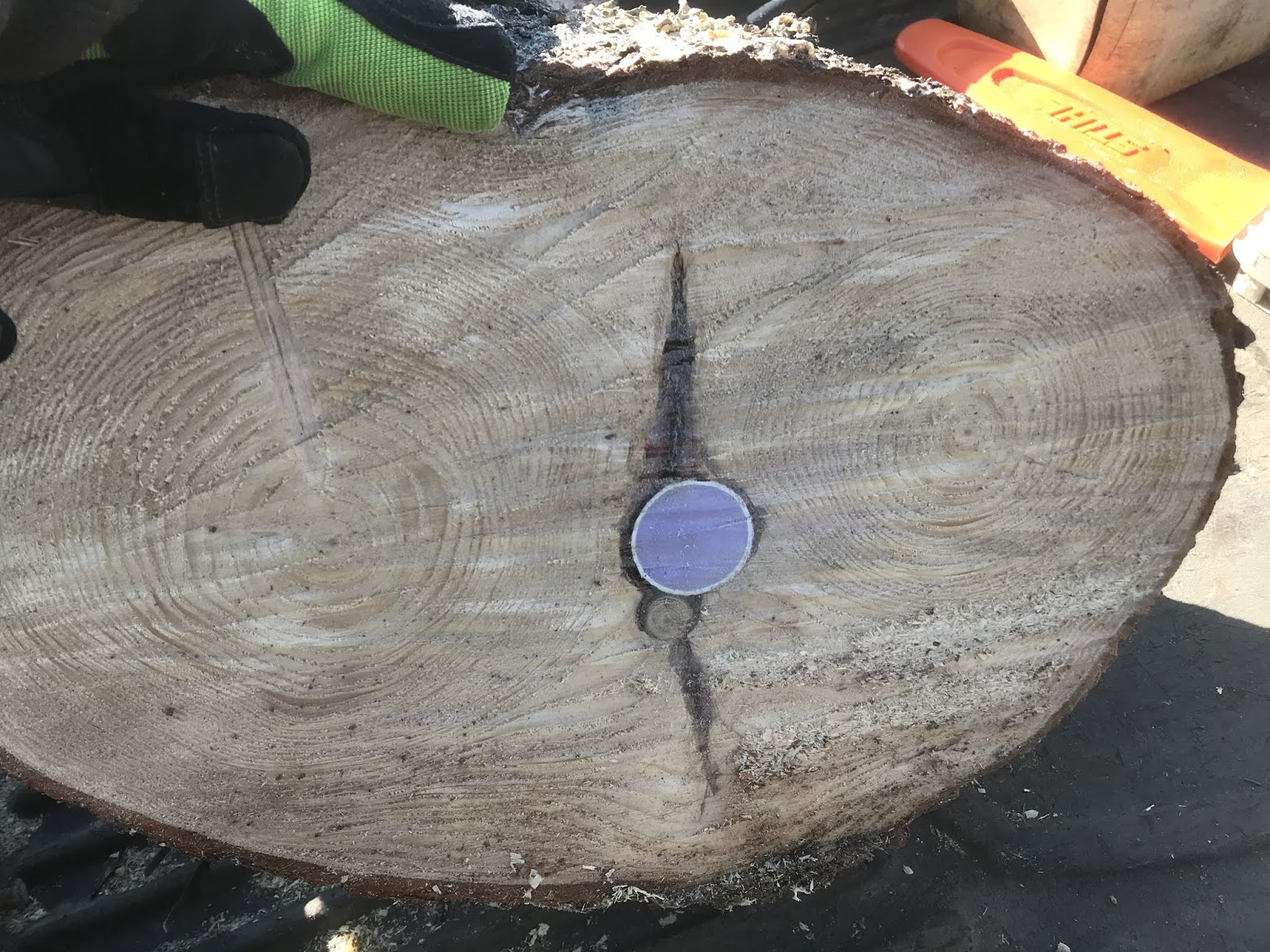
Interesting picture of a golf ball that was embedded in the middle of a blue spruce tree. It must have lodged into a branch intersection point and the tree grew around it, eventually engulfing the entire ball.

 With the abundant amount of snow-cover and cold air currently up in Canada combined with the time of year, I feel winter is ripe for a comeback. Hopefully that does occur, ending our mowing practices, and giving the grounds department a chance to finish tree removals, design new landscape areas, attend turf/horticulture seminars, do bunker drainage work, staff recruitment, and work on our maintenance policies for the 2020 season.

Brad Piecuch
Grounds Superintendent 

Thursday, December 12, 2019

Tree and Winter Work

 Currently, leaf removal has been absorbing most of the grounds department's time. The many pin oak trees located throughout the golf course (because of marcescent foliage) are slowly letting go of their leaves. The wind storm that blew through around Thanksgiving helped to fall much of the foliage; however there are a couple trees still unloading. Hopefully we are on our final blow/chop operation and will be able to move on to other projects shortly.

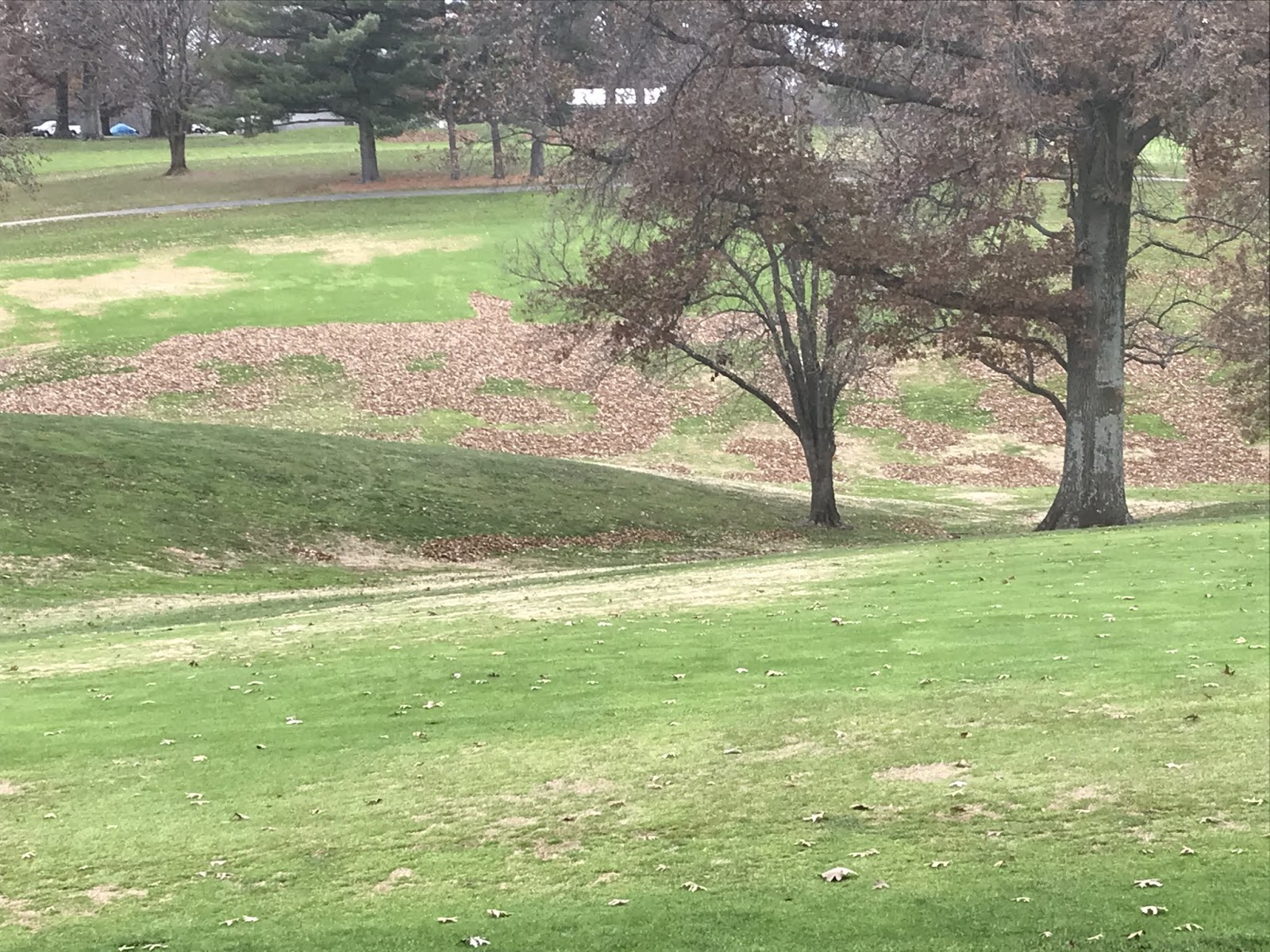
An abundant amount of oak leaves after the pre-Thanksgiving day wind storm


 One important winter project on the horizon is tree/branch removals. In October we conducted a tree evaluation to address any diseased or dying trees. A few of our oak trees are becoming infected with Ganoderma-an aggressive wood rotting fungal infection that decays heartwood and can move into vascular layers. Large abrasions are a common entry point and once a tree is infected there is no cure. One of the first noticeable signs of infection is the presence of a conk (mushroom growth) growing on the trunk. This combined with significant canopy dieback indicates a severe infection and is recommended for immediate removal. Another common malady is co-dominant trunks with included bark. Large pin oaks with this have a high failure rate because of the massive amount of pressure put on the intersecting point. The lower the co-dominate trunk branches begin the more dangerous the situation. Also, many of the Colorado blue spruce trees are becoming infected with rhizosphaera needle cast disease and/or cytospora canker disease and are quickly deteriorating. Not to mention the emerald ash borer and all the damage that has caused to the ash trees.


Red conk indicating a Ganoderma infection on a red oak

White sap coming from an infection point indicating cytospora canker disease on a blue spruce.

Rhizophaera needle cast disease on blue spruce trees indicated by dieback of lower branches progressing upward.

Co-dominant trunk with included bark on pin oak by #8 tee

Dying ash tree courtesy of the emerald ash borer.


 The grounds department has a certified arborist on staff and consults with a board-certified master arborist once every two or three years to ensure that the WHCC trees are reasonably safe and in good health. Some healthy trees are in consideration for removal only if they are negatively impacting high priority turf areas (click here for more information about trees and turf). Some of these trees were recommended for removal by the USGA agronomist during his visit in May. All potentially removed trees are discussed with the greens committee before any removals take place.

2019-2020 winter tree removals

 Outside of tree work there have been other projects that the grounds team has been accomplishing. One was the blow out of the irrigation system in early December. This is a necessity to eliminate the possibility of pipes freezing and cracking during the winter months. This was accomplished by hooking up an air compressor to our pump station and then blowing out each individual head on the course and winterizing the pump station. Other projects included: leveling out of the bumpy area at the bottom of #15 fairway, completing the late fall fertilization, finishing the tulip bulb plantings, and continuing to mow on an as needed basis.

Irrigation blow-out
Leveling of #15 fairway area


 As we move deeper into winter, tree work will take center stage along with parking lot snow removal, attending turf/horticulture seminars, new landscape designs, staff recruitment, equipment maintenance, creating maintenance standards and a 2020 maintenance calendar, bunker work, and the upkeep of appurtenances. The grounds department is thankful for a great 2019 season and we look forward to an even better 2020 season. We wish everyone a Merry Christmas and Happy New Year!

Brad Piecuch
Assistant Superintendent

Sunday, November 10, 2019

Its Beginning to look a lot like... November?

  In recent years November, along with Thanksgiving, seem to be getting pulled into a continuation of the Christmas season. Stores begin decorating in October, Christmas commercials begin appearing regularly by Veterans day, and the radio stations start playing Christmas music before the kids start receiving Halloween candy. The last couple of years mother nature seems to be following suit. The temperatures that have descended upon the tri-state more closely resemble late December rather then mid-November. We usually average around 50 degrees for high temperatures in November and the last couple of weeks the thermometer is struggling to reach 40 with lows in the 20s and teens. Hopefully we dodge another ice storm like last November. These conditions have the grounds department scrambling to catch up on leaf removal, mowing, fertilization, and draining out the irrigation system before the next arctic blast.

  The cold temperatures have a major effect on the turfgrass. The growth starts to slow down causing longer recovery time from stressors such as foot traffic, ball marks, and maintenance practices. Also, the cold causes many situations where we have to shut down the golf course to prevent any turf damage that may occur. This makes it a good time to touch base on winter play and course conditions.

  There are five main reasons why the course may be closed or delayed during winter months.  They are snow, frost, frozen ground, thawing ground, and very wet conditions.The first is fairly obvious, finding a white, or even colored golf ball, after a snow storm is virtually impossible and trying to putt would be comical. Snow does provide insulation from low temperatures and winter winds; however melting snow can refreeze and cause crown hydration injury. Frost and frozen ground can cause significant damage to the turf when walked or driven on. Thawing ground can cause root damage from foot traffic when the top layer of soil is thawed and the lower layer is still frozen. Any traffic during this scenario will break the roots in between the two layers. Wet ground is also very common this time of year from the freezing, thawing, heavy rainfall, low evapotranspiration rates, and the dormancy of the turf (prohibiting any water uptake). Walking on highly saturated soil will cause deep footprints that will create craters and unevenness especially prevalent on putting greens. For more information on winter play closures click on this informative article by the USGA. 

Frost damage from cart traffic

Black footprints caused from walking over frosty turf
First snowfall of the season

Cart damage from driving over frozen turf


 The agronomy team is committed to providing the best conditions as possible. Sometimes closing the course is imperative to maintaining healthy turf. In collaboration with the golf staff professionals we will communicate when these closures or delays take place. We apologize for any inconvenience and understand the famous quote "if you don't like the weather in Cincinnati, just wait a minute!"

Brad Piecuch
Assistant Superintendent