Monday, October 28, 2019

Fall Projects

 The grounds department has been extremely busy tackling many fall projects. Golf Preservations has installed drain tile into two poorly draining soil based greens. There are many benefits to having a better drainage system installed, some of them are as follows:
  • increase turf quality 
  • increase green speeds
  • create firmer conditions 
  • decrease compaction
  • increase root depths 
  • allow greens to be opened up quicker after a rain storm
  • decrease disease presence
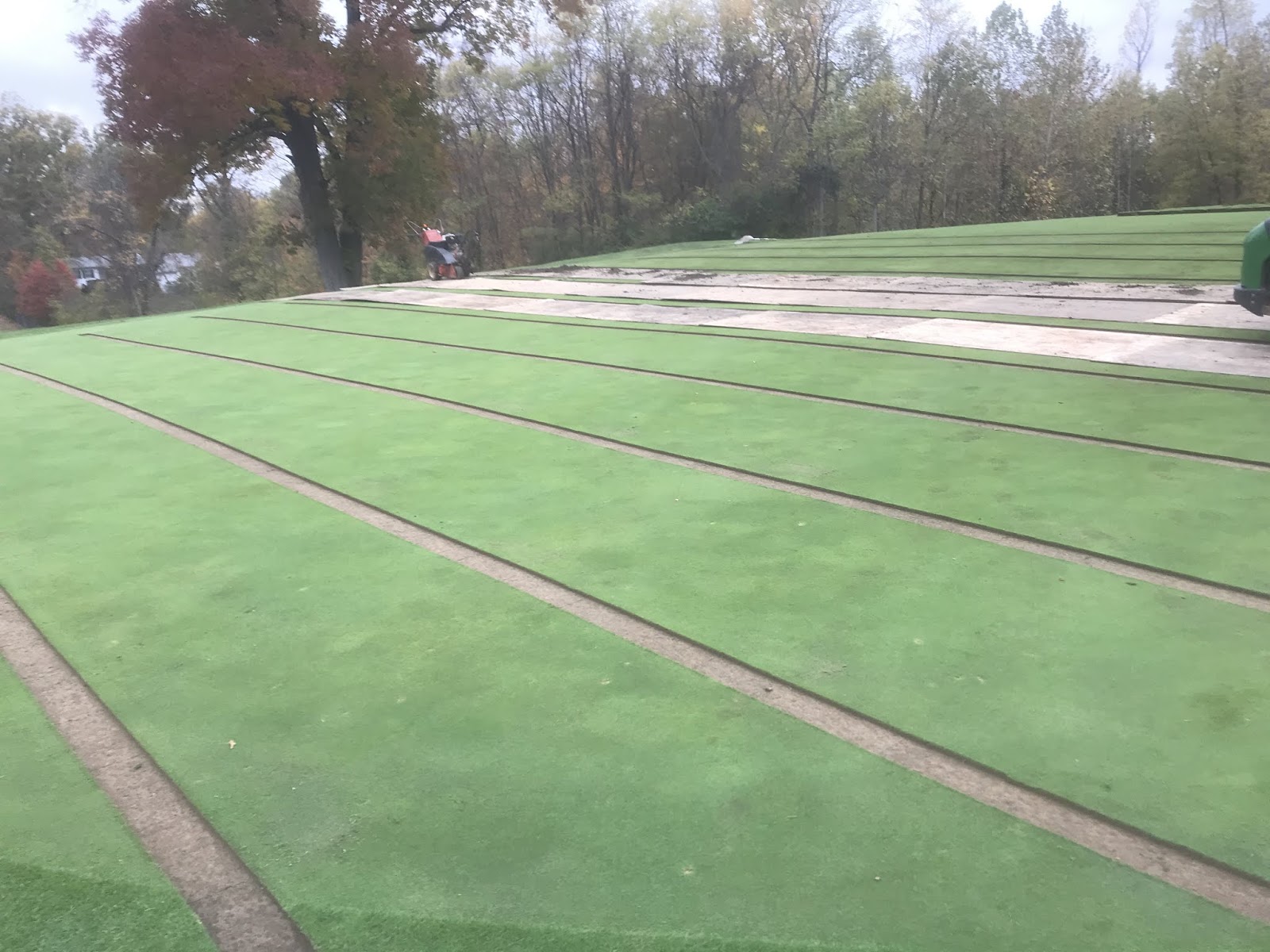
  It takes about a day to finish a green. They first survey the green, then map out the location of the drainage, cut the sod, dig the trench, remove the spoils, install 2" perforated pipe, back fill with a 6-2-2 (sand, peat moss, topsoil) mix, and finally place the sod back on the trench and install valve boxes for flush out areas. The tile is placed around 15"-16" below the surface and drains out to the lowest point on the green. Holes #6 and #2 will be closed for a short time to allow the sod to root in.

Golf Preservations trailer

#6 green drainage install

digging trenches on #6 green

main drainage trench

Using plywood to minimize disturbance to the green

back filling ditches and installing the old bentgrass back on top

Drainage completed #6 green


Drainage install #2 green


Main trench for #2 green


Completed drainage project #2 green


We were able to replenish the fairway/tee nursery with leftover bentgrass sod


#2 green after a rain storm, before the installation of new drainage

#6 green after a rain storm, before the installation of new drainage


  Another project taking place, with the help of Russ Macke, is the expansion of three forward/alternate tees. These small tees on #7, #9, and #17 will be enlarged by 2 to 3 times their current size and leveled out. We are using the excavated dirt from #6 and #2 greens drainage projects to help with this job. Hopefully, this will encourage golfers to use these tees more often, decreasing some usage of the further back tees and alleviating their leveling concerns. Drainage has been an issue at the front of #13 green and we have installed new drain tile and a catch basin to try and resolve the problem.

Excavating the sod on #9 forward tee

Excavating the sod on #17 alternate tee

Using the spoils from #6 green drainage project for the expansion of #9 forward tee


Leveling of the expanded #7 forward tee

Newly sodded #9 forward tee

Drainage added to the beginning of #13 green


New drainage installed #13 green


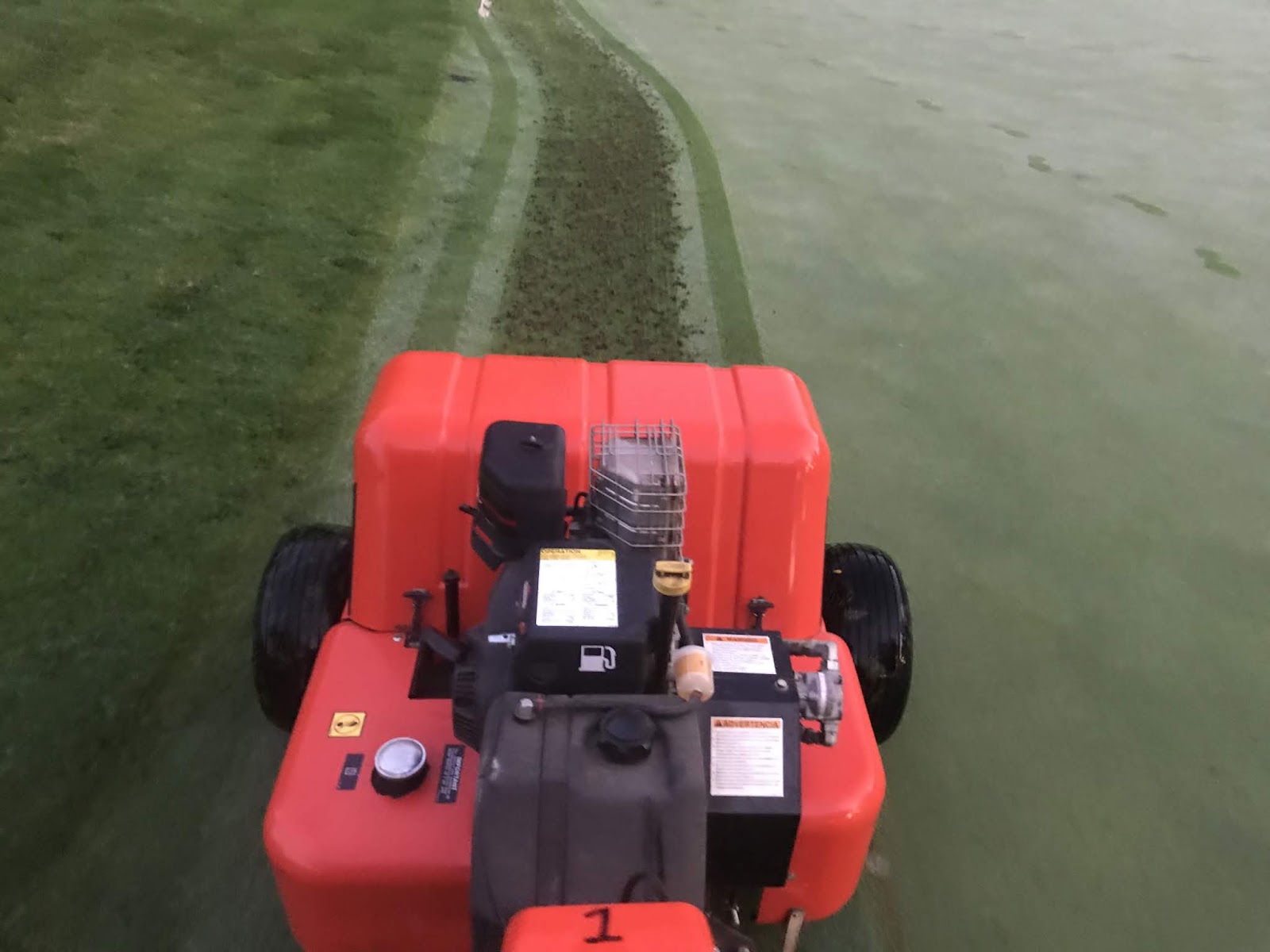
 Our other fall maintenance projects are moving along nicely. Aeration of tees, fairways, and rough have been completed, as well as, early fall fertilization.The turf has responded well to these practices and is showing off its bright green colors as we speak.

Aeration of #6 fairway


Aeration of #1 fairway


Aeration of # 13 tee

#2 fairway three weeks after aeration and early fall fertilization


 An athletic field mix of bluegrass was slit seeded into a Bermuda grass area on #11 fairway last month. We are starting to see results as some of the bluegrass has germinated. Right now, it is patchy because the Bermuda grass was extremely thick and healthy when seeding took place. The warm early fall temperatures kept the Bermuda actively growing longer than usual which hindered germination of some of the bluegrass. However, bluegrass is an aggressive creeping grass and it will be interesting to see how it fills in during the late fall season. We will continue to monitor this plot throughout the shoulder season to consider if Bluemuda (click here for more information) is a potential solution to our Bermuda grass situation. 


Bluegrass germination on #11 test plot. Notice the dark green bluegrass patches mixed in with the brown, dormant Bermuda grass.


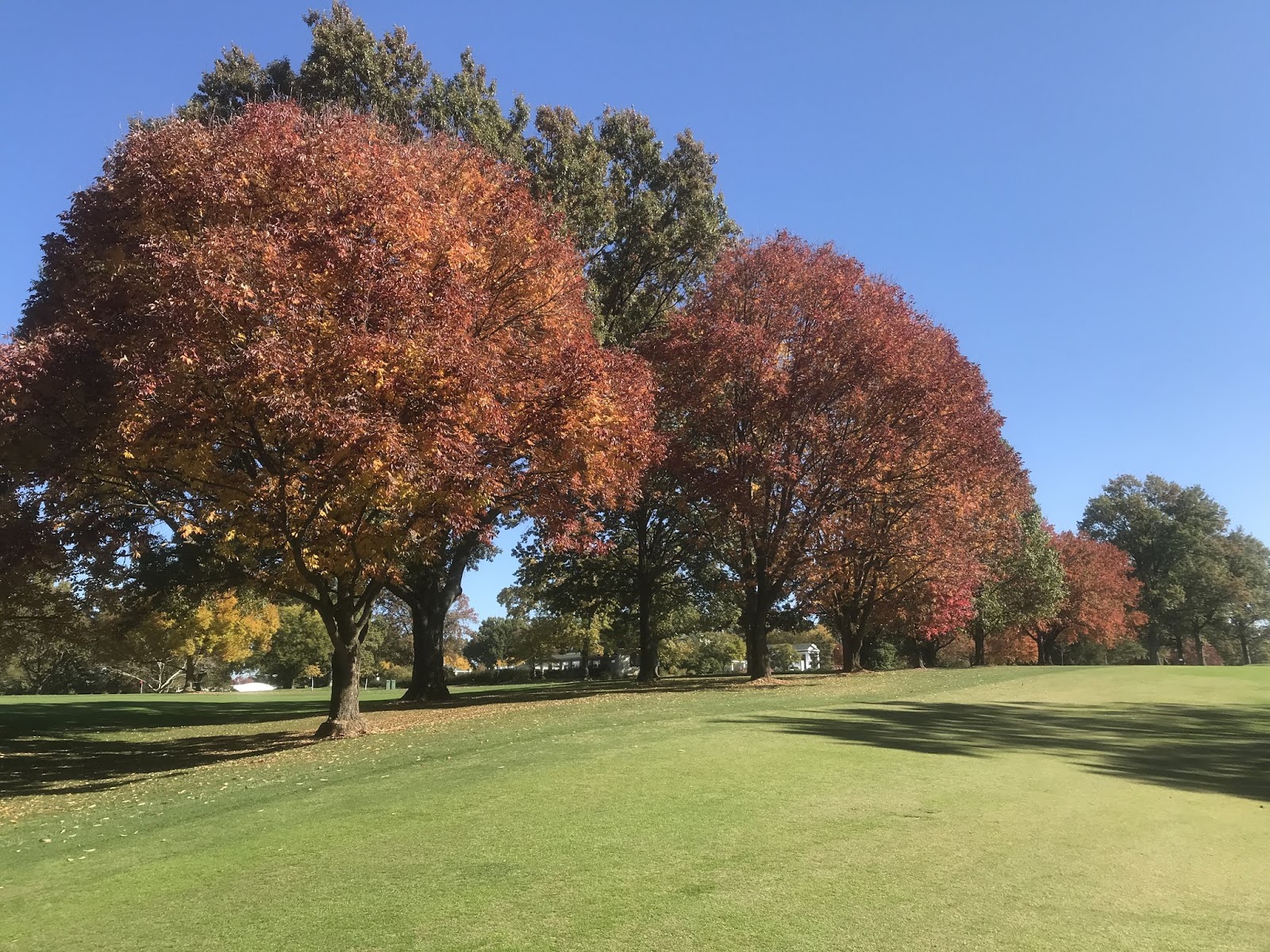
  Finally, after completion of these jobs most of our attention will be focused on leaf removal. The WHCC trees are starting to put on their fall show. The ash, maples honey locusts, and hickory trees are in full color. This contrasts well with the bright green turf and allows for some great photo opportunities.

White ash trees fall color

Green ash trees fall color

White and green ash by #18 green


Sugar maple fall color right of #7

We apologize for the inconvenience that these projects have caused; however the benefits will be noticed and enjoyed for years to come.

Brad Piecuch
Assistant Superintendent/Horticulturist 


Friday, September 13, 2019

Around the Grounds-September

  Well, it's that "tine" of year again. Time for core (or hollow tine) aeration. We completed the greens aerification on September 3rd. Hollow tine plugs were pulled out, then removed, and the greens were given a heavy topdressing to fill in the aeration holes. Next up will be tees, followed by short rough, and finally, on October 8th, the fairways will get core aerated. (click here for more information on aeration) Also, September and October are important times to fertilize cool season turfgrass. We will be fertilizing tees, fairways, and rough with a heavy nitrogen granular fertilizer once mother nature decides to put an end to the summer temperatures. The greens will get a lighter amount of organic macro-nutrients in the next couple of weeks. This fertilization will help the turf recover from summer stress and increase growth leading to a healthier stand of turfgrass.
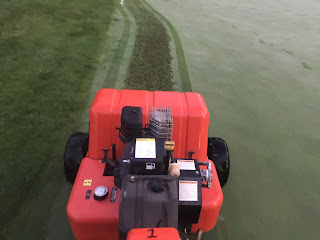
Core aerating #5 green


Topdressing the putting green after aeration

 It is also the time of year that the WHCC tree roots are having a big impact on turf health. After starting the year off very wet, the last couple of months have been extremely dry. That means that both the grass and trees are competing for available moisture. The areas where the trees are winning the battle are becoming noticeable, with big patches of brown and stressed out turf. We have been increasing our irrigation around these areas, but we need a good rain to saturate the soil enough to provide both plants with adequate moisture.  September is the driest month for the Cincinnati area; however we need some rain and cooler temperatures for the turfgrass to fully recover.

Tree roots out competing turf for moisture

The bentgrass on #12 approach and a pin oak tree struggling for available moisture
  

  Speaking of trees, there has been some tree maintenance occurring during the last couple of months.  A few wind storms blew through and took down certain branches and entire trees. Also, several varieties put on heavy fruit, such as ginkos and oaks, that cause the branches to sag down, and sometimes break off. 
Cleveland select pear losing a large branch


Emerald ash borer causing the death of this ash tree, then toppling over during a wind storm


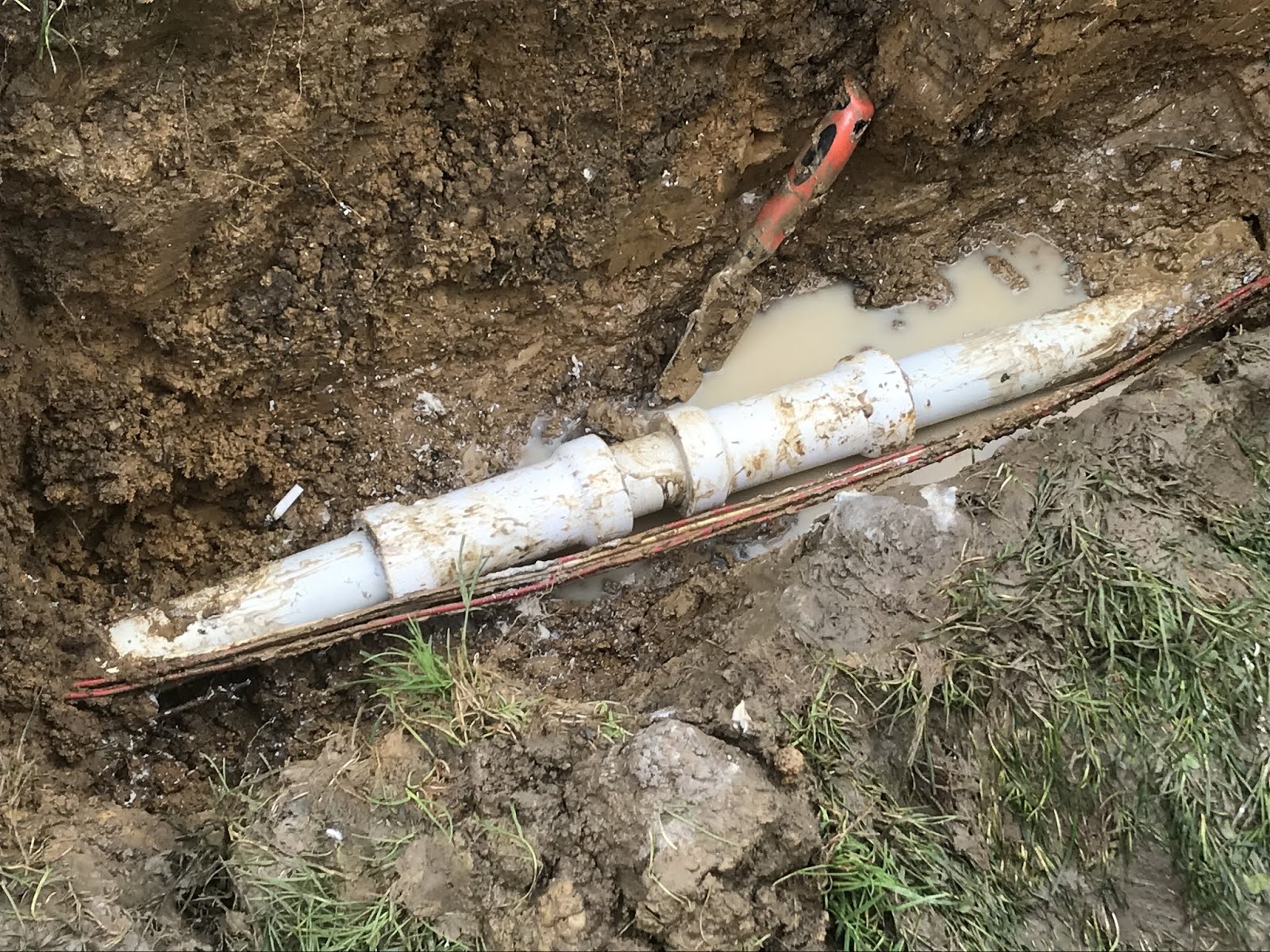
  Irrigation leaks seem to be picking up steam. We have had a multitude of pipe leaks in the last month.  The wet spring made them hard to identify, but with the recent dry spell they have become easy to spot. Luckily, we have a dedicated irrigation crew, lead by Michael Westendorf, that has been keeping up with the pipe leaks, and leaky irrigation heads.

Bell-end pipe leak


Chris Wheeler showing us the exact location of this leak. Thanks Wheels👍

  We are, hopefully, on our last couple of spray applications for the year. It has been a long season of battling insects, funguses, and fertility issues but the end is in sight. Once the cool autumn temperatures arrive, the major diseases will no longer be an issue and the grass will not be consistently stressed allowing it to fight off many of the late season disorders.  Come on fall!
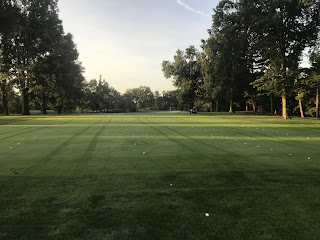
A fairway spray application


 On the horticulture side, the annuals are hitting their stride. The new guinea impatiens are at their peak, and the tropical plants are certainly loving the extended hot summer weather. Some of the newer varieties that were planted this year like, the Mexican petunias,and the cleome, performed very well. In the next couple of weeks the fall annuals will be replacing some of the worn out summer annuals. So be on the lookout for mums, pansies, millet, and peppers to be making their appearance around the grounds. Also, this is the time of year we design the annual display (both spring and summer) for next season. We have some new and fresh ideas so stay tuned!

New guienea impatiens, redhead coleus, and euphorbia 'diamond frost'

Mexican petunias, pink cleome, and pink pentas

  What do you get when you cross Bermuda grass with bluegrass? Bluemuda (click here for more information) - and it could be the answer to our dormant, brown Bermuda grass fairway areas. This is a newer concept that has become increasingly popular in the transition zone over the last couple of years. It involves inter-seeding with newer varieties of Kentucky bluegrass into an already existing stand of Bermuda grass. The Kentucky bluegrass would thrive in the shoulder seasons and the Bermuda would take over during the summer. Both grasses have a creeping habit which would increase survival for this two grass system. We over-seeded a small area of Bermuda with an athletic field mix of Kentucky blue on #11 fairway. Bluegrass takes 20 days to germinate so we should see in October the success of this test plot. Another benefit of bluemuda is once the bluegrass is established, future over seeding would not be necessary.  The more traditional option, in the transition zone, is to over seed with perennial rye. The rye-grass has quick germination and looks great in the fall and spring. However, the rye-grass is a bunch type grass that struggles in the heat and gets crowded out by the aggressive Bermuda, causing the over seeding process to take place again the following year.  Bluemuda was recommended by the USGA agronomist, during his visit in May, and we will closely monitor the results.

Over-seeded area in #11 farway


Brad Piecuch
Assistant Superintendent/Horticulturist 


Sunday, August 4, 2019

The Need for Speed!


  Putting surfaces have evolved immensely since the first golf course in Scotland. Back then all that was needed was a stick and a pebble. Green speeds were unheard of and so was putting in general. Fast forward to the 1930s and a man named Edward Stimpson came up with an idea to measure green speed using a device made of wood that is now called the stimpmeter.  In his 1937 article "Introducing the Stimp"  Stimpson  reported readings from three different clubs and the average was 2.5 feet. In the seventies the USGA came out with their own model of Stimpson's invention and made it available to greenskeepers. They recorded averages around 6' from over 100 courses nationwide.  Augusta National was under 8' and pebble beach was around a  7.2'. My, how times have changed! Today, regular play on the PGA tour is around 12' with major championships running between 14’    and 15’.

 At WHCC, the agronomy team strives to maintain a speed that is enjoyable for golfers and one that does not stress out the golf greens to the point of death. This is a hard objective to achieve. Many factors are weighed on a daily basis such as rainfall amounts, temperature extremes, time constraints, spray applications, equipment used, moisture levels, grass types, and the list could go on and on.  There are six ways to achieve higher green speeds and they are as follows:

1. Mowing height. This is fairly obvious, the lower the height of cut the faster the green speed. However, this is also the easiest and fastest way to lose an entire green. Greens need leaf material in order to produce photosynthesis and growth. Mowing grass short decreases photosynthesis and if cut too short, especially during hot weather and increased stress, entire greens will be lost. According to the USGA the current recommendation is to mow as high as possible to achieve the desired green speed. Sometimes it is necessary to increase the mowing height to maintain healthy greens.

2. Rolling. This has a big impact on green speed. According to our current data rolling increases speed by around a foot. According to Thomas Nikolai, agriculture professor at Michigan State University, there are many benefits to rolling such as, height of cut can be raised and green speed retained, decreased cutworm activity, decreased dollar spot disease, smoother putting  surfaces,  and less weed presence. However, it also increases the need for aeration due to increased compaction.

Heavier Salsco roller

Light Weight roller


3.  Cultural Practices. Topdressing, aerating, and verticutting all impact speed. The more of  these  practices we perform the firmer and faster the speeds will become.

Topdressing on #5 green


4. Irrigation/Moisture content. The drier the greens the faster the greens. However, this needs to be weighed against the turf's water requirements and daily evapotransporation rates. High humidity can also negatively affect speed with lower humidity producing faster results. Drainage is of the utmost importance on putting surfaces and with 10 greens not up to USGA drainage requirements those green speeds will be negatively affected. Also, shade from trees affects how quickly and efficiently water is absorbed and drained. We are currently looking at ways to better improve this area including: possible removal of trees affecting sun exposure, watering less, and increasing our hand watering regimen.

Pin Oak casting shade onto #16 green during morning hours


 5. Plant growth. The less growth of the plant the quicker the ball will roll. Mother nature helps us in this area after the first frost when the grasses' growth slows down. Additionally, during the growing season we use bi-weekly spray applications of Plant Growth Regulators to slow down growth and increase stimpmeter readings.  Also, higher amounts of nitrogen decrease speed; however nitrogen must be supplemented to help the turf survive the daily stresses of play and maintenance. To combat this issue we fertilize heavier in the spring and fall with granular fertilization and spoon feed the turf with light nitrogen spray applications during the summer months.


6. Type of grass used. L-93 bentgrass mixed with poa annua  is what the majority of our putting surfaces are made of. It can be cut at extremely low heights, but there are newer varieties that are being produced that have better stress resistance and can take lower mowing heights.

  This season, the agronomy team, has had a plan in place to increase speeds and the results have been very positive. Stimpmeter readings are taken at least three times a week on 7 of the 18 greens. We choose greens, and areas on those greens, that are flat that give us the most accurate readings. We roll two balls in one direction measure the distance and repeat the process going in the opposite direction and then take the average of the two. All the green's averages are added together to make a daily average reading. Our current plan has increased the green's speeds significantly from last season. We share these results monthly with the greens committee and make adjustments as needed. Currently our 3-month average is 10.5', which is a good number for regular play. This year is somewhat of a test to see what the greens can handle and make a plan moving forward. The summer months are the hardest time for cool-season grasses, and we are currently evaluating the greens conditions during this stressful time. We are seeing an increase in localized dry spots from these increased speeds and extreme heat. Many greens at WHCC were constructed in 1912 and other clubs in our area have newer and better draining greens. This is definitely an area that needs to be addressed if higher readings are desired. The need for speed is a trend that looks like it will be around for a while and the agronomy team is committed to providing the members the best greens possible.

For more informtion on green speed from the USGA click here 

Brad Piecuch
Assistant Superintendent/Horticulturist

Wednesday, July 3, 2019

Hot is not Cool!

 One thing all cool-season grasses have in common is their inability to tolerate hot temperatures. When the air and soil temperatures heat up turf starts to decline. 90 plus degree soil and air temperatures literally cook the cells of the cool season plants. Add in the abundant amount of rainfall that we received in the spring and early summer and we got a recipe ripe for disease problems. We have been keeping up with the fungicide spray applications but the monsoons that fell reduced some effectiveness of the sprays. We have started to see some evidence of this, especially, in rough areas. They strike quickly, in the right conditions, and sometimes happen overnight.  Pythium blight, brown patch, anthroacnose, dollar spot, summer patch, and gray leaf spot are the summer diseases that are quick to pounce. Even though the summer pathogens gave the course a good right cross; we countered with different chemicals and earlier application intervals to keep most areas of the course disease free.

Pythium blight in #8 rough. Chemical application was applied as soon as detected.


Dollar spot on #9 approach. The disease has been suppressed. 

 Another factor giving the agronomy team, and the golf course, a good amount of stress this time of year is our "good friend" poa annua. Poa annua or annual bluegrass is a winter annual grass that typically goes to seed in the spring, dies out in the summer heat, then germinates again in the fall. It is also extremely susceptible to many of  the summer diseases especially anthracnose. We do strive to suppress and limit its growth in the spring with PGRs; however it is almost impossible to fully eradicate. We keep as much of it green and alive, as possible, in the fairways, tees and greens during the summer by keeping adequate moisture in the soil, and syringing ( keeping the soil temperatures down), but some of it will die and cause dead patches to occur. The great (or bad) thing about poa is that when the days get shorter and the temperatures cool off, the seed, that was put out in the spring, will germinate and fill back in the bare areas.

 The grounds department will do everything possible to keep as much of the cool-season turf alive and healthy but we could use everyone's help during the summer. We ask that all golfers try and limit the amount of time that carts are in the fairways, and use the ninety- degree rule when entering and exiting during days of extreme heat (close to or over 90 degrees). On these days the grass is so stressed simply driving over them can cause severe damage. This type of damage usually occurs during the middle of the day when the sun is at its peak and the temperatures are the highest. Limiting cart traffic to the rough as much as possible will greatly help improve fairway conditions.

Golf cart traffic damage, due to the hot conditions, on #11 fairway

There is some grasses that absolutely thrive in these conditions and they are the warm-season varieties.  Zoysia and Bermuda are the most popular of these types for our area. We do have a decent amount of Bermuda at WHCC and it is basking in the heat and sun as I write this. It looks lush and healthy and is a good plant for southern facing slopes where many other grasses struggle in the summer months.

Bermuda grass on #15 lovin it!


The irrigation system is now up and running and is being utilized frequently. The wet conditions in the spring and early summer caused many of the turf roots to become shallow. They were acclimated to the abundant moisture close to the surface and did not need to grow deeper. Once the heat cranked up and the rainfall stopped the turf needed frequent irrigation cycles to keep the roots moist in the top soil layers. Even with the nightly use of the irrigation system, certain areas will need more water then others-for example, mounds, localized dry spots (LDS), and high traffic areas. The most efficient way to combat this is through hand watering. So do not be surprised to see many of us out with hoses irrigating and syringing problem turf areas.

LDS starting to form on #8 green


The horticulture crew was able to complete the landscape design behind #14 tee last month. The bed containing spruce trees and white pines located behind #17 green was cleaned out and mulched with pine straw. The fence behind #14 tee was extended. Emerald green arborvitaes and climbing hydrangea vines were the plants used to screen the unsightly view of the fence. The use of the pine straw gives it a very natural look and it will continue to grow and fill in providing a beautiful addition to the golf course for years to come.


Cool temperatures, and heads, will eventually prevail as it does after every summer season at WHCC, but until then, the grounds crew will utilize all the tools available to keep the cool-season grasses cool (and alive) in the summer heat.


Brad Piecuch
Assistant Superintendent/Horticulturist


Saturday, June 8, 2019

June Grounds Update

Hydrangea arborescens 'Incrediball'

It's June and summer has finally arrived! Unfortunately, the abundant spring rains are continuing. I may sound like a broken record, but it has been WET! How wet, you ask?  Well, according to the National Centers for Environmental Information the last 12 months (June 2018-May 2019) in the contiguous U.S. have been the wettest on record. With records going back to 1895. We have also experienced the wettest January to May period in U.S. history. June typically can be another wet month, so we may break another 12 month record, only time will tell.

Mother nature's abundant amount of rainfall has been enjoyed by the newly planted summer annuals.  We get all of these annuals from Roger and Linda Feist at West Hills Greenhouse in Delhi.  The Delhi area has the nickname of "Floral Paradise of Ohio," and for good reason. At one time there were approximately 60 operating greenhouses in Delhi, now there are around 6. Here at WHCC we are trying to keep this nickname alive by purchasing our annuals from a local distributor and taking pride in our horticulture program to help keep the West Side the "floral side" of Cincinnati. We incorporate many tropical annuals into our designs such as: new guinea impatiens, cannas, elephant ears, crotons, caladiums, pygmy date palms, and pentas. They are just starting to root in, and with adequate moisture and fertilizer they should double in size in the next month.

Pink cannas, white caladium, sumo petunias, english ivy, and dragon wing begonias in pots

yellow marigolds, gomphrena 'fireworks', and canna australia by pool

crotons by 11 tee
 June is a great time for the perennial and shrub flowers as well. The bed behind #11 tee is filling in nicely with the perennial flowers starting to show. The incrediball hydrangeas are coming into bloom and can be viewed anytime while enjoying a meal on the back patio. Our president, Mr Oberklaus, had the idea of putting in bamboo as a screen for the fence holes that run parallel to the street. The right of #12 is our test plot, and after a pretty harsh winter the bamboo is looking healthy.


#11 landscape bed

Incerdiball hydrangeas just beginning to bloom

Bamboo: spectabilis and yellow grove by 12 fence

next project for the landscape department. To be continued...

On the turf side, the rainfall has increased our spray program. We are having to make bi-weekly spray applications to keep ahead of fungal diseases. One such disease that effects poa annua and bentgrass is anthracnose. Basal rot anthracnose, specifically, occurs during cool wet springs with overcast conditions right after peak flowering. We were able to keep the disease off of fairways, tees, and greens with diligent spraying, but the rough fell prey. We had to move up our rough spray application (usually first spray is end of June) to combat this, and we are applying a fungicide combined with a high nitrogen fertilizer to the play rough; however, it is impossible to spray the entire rough without having a budget close to Augusta National. 

Anthracnose in the rough in front of #9 fairway


The irrigation system has not been used as of late, but significant maintenance has been accomplished in the form of leaks and computer issues. Currently, we have replaced 2 face plates, a modem, repaired 3 bell-end pipe leaks, and 4 foot valves. With over 1000 heads, this comes with the territory  but this year has already been a busy year for the irrigation department. Hopefully, the kinks will be out by the time the dry, hot mid-summer weather arrives.
Bell-end pipe leak right of #2 green
A new roller has been purchased to help with our greens maintenance program. It is a newer salsco roller that will replace our old one that was purchased in the 1990s. It is bigger with a rolling swath of 73", weighs 1180 lbs, and has a ground pressure of 7 p.s.i. Also, it can go up to 11 mph helping us to roll faster to stay ahead of morning play.

New roller in action
Finally the practice tee is starting to show signs of wear and tear. The grounds crew would like to remind everyone of the proper divot pattern on the practice tees. They should be in a linear pattern for 20 shots spaced around 2 to 4 inches apart. We have also included a new sign at the range for a friendly reminder.

Not a good divot pattern on our practice tee. It will take more time for this to heal, possibly months

Three weeks after a good divot pattern on the lower tee. Notice how quickly they fill in! 
Brad Piecuch
Assistant Superintendent/Horticulturist