Wednesday, June 2, 2021

Around the Grounds-June


 May is usually the busiest month of the year for the agronomy team and this year was no exception. Getting the spring annuals replaced with the summer flowers and mowing have been two of the most time consuming activities that have taken place. The tulips put on a great display and now have been replaced with many different flowering annuals. We are fortunate to have many girls working on our crew this year that are either enrolled in a horticulture related program, or are interested in the profession. They have been doing a great job putting together the summer display.

Purple verbenea and crotons

Starlight rose zinnia and elephant ears

Yellow lantana and Caladiums


 On the other hand, keeping up with mowing has been a tall task, especially after the grass explodes with growth coming out of winter dormancy and from fall/spring nitrogen feedings. We have been doing a good job keeping up with the mowing on greens, tees, and fairways. However, the rough is the biggest turf area we have on the golf course and occasionally after a rain event, it can get long and "rough." Most of March and April had been on the drier side, but once May hit, rain storms hit with more frequency. Rain hinders our ability to mow the rough without leaving tracks and tearing up areas of turf. Sometimes it is better to wait until conditions are drier rather than destroying grass. One day of not mowing makes us play catch up  for the rest of the week, and consequently the rough is higher than desired. Of course, there are times when multiple rain events coincide and we have to be aggressive and mow in wet conditions, but this is the exception and not the rule. We ask for patience during wet weather and understand that the rough may be a little higher than expected.

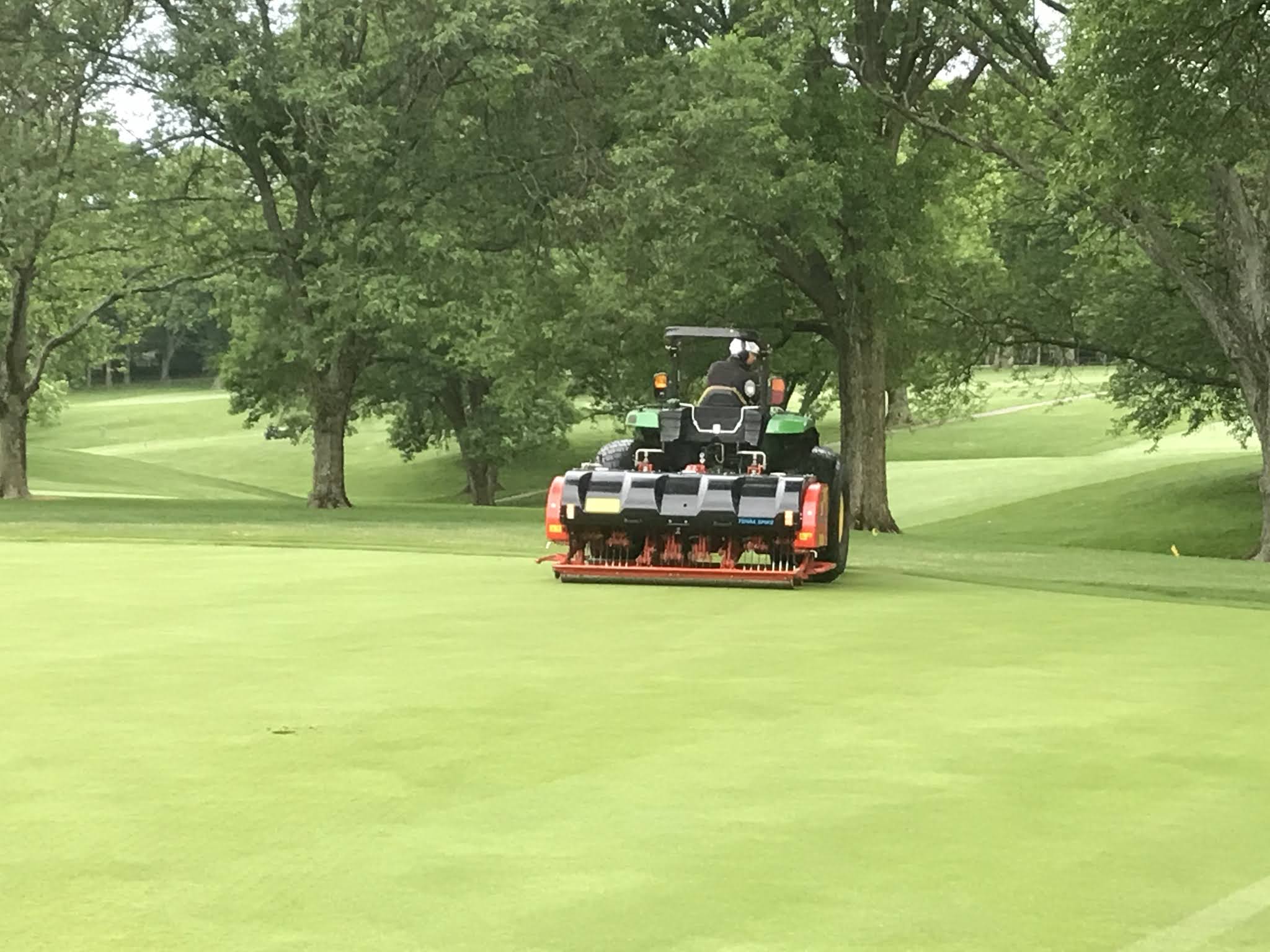
 The green's cultural practices have been running smoothly. Verticutting and light frequent topdressings have taken place since the beginning of the golf season. The new spinning topdresser that was purchased last year has allowed us to make lighter topdressing applications; increasing the green's firmness and the speed of the putting surfaces. Deep-tine aeration was accomplished on June 1st. Wehrkamp enterprises was used to aerate the greens using 5/16th inch solid tines and a heavier topdressing was applied after. The tines were small enough that the impact on golfers should be minimal and aerating this late in the spring season will help the greens get through the hot, dry summer weather. 


Aerating of the putting green

Putting green after a heavier topdressing

Verticutting a green

Lightly topdressing after verticutting

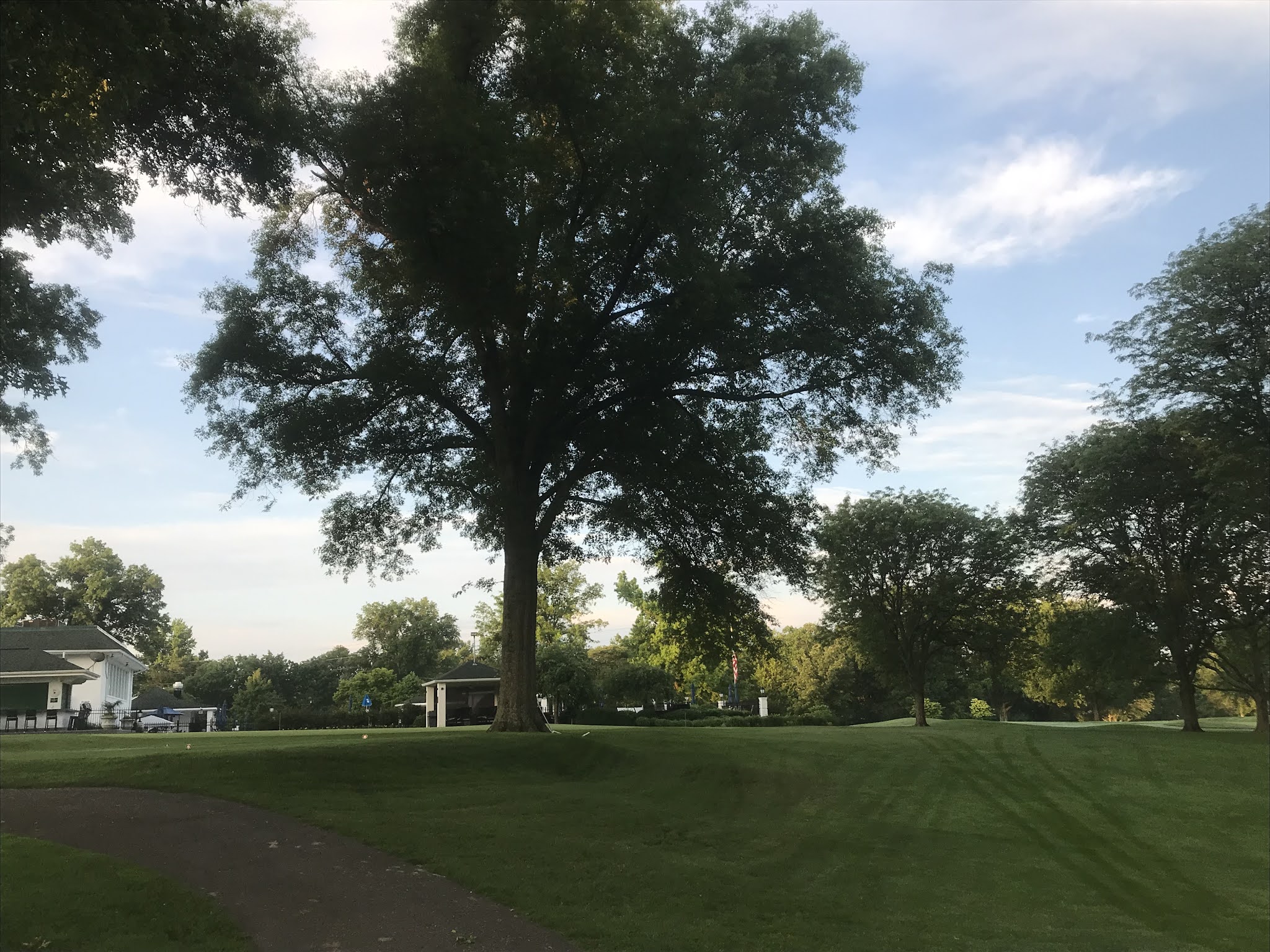
Tree work has been accomplished around the putting green and #1 and #6 tees. The pin oak next to the putting green collar has been removed due to the putting green expansion project taking place in the late summer. The two pin oak trees by #1 tee and #6 tee had dead wood and low limbs taken out for safety concerns and to improve visibility while looking at the course from the patio area. Finally, the pin oak by #1 tee received a cable to support its co-dominant branch structure.

Pin oak by putting green before removal

Tree company at work 

Putting green area after pin oak removal

Pin oak behind #1 tee trimmed/pruned and a cable inserted between co-dominant branches


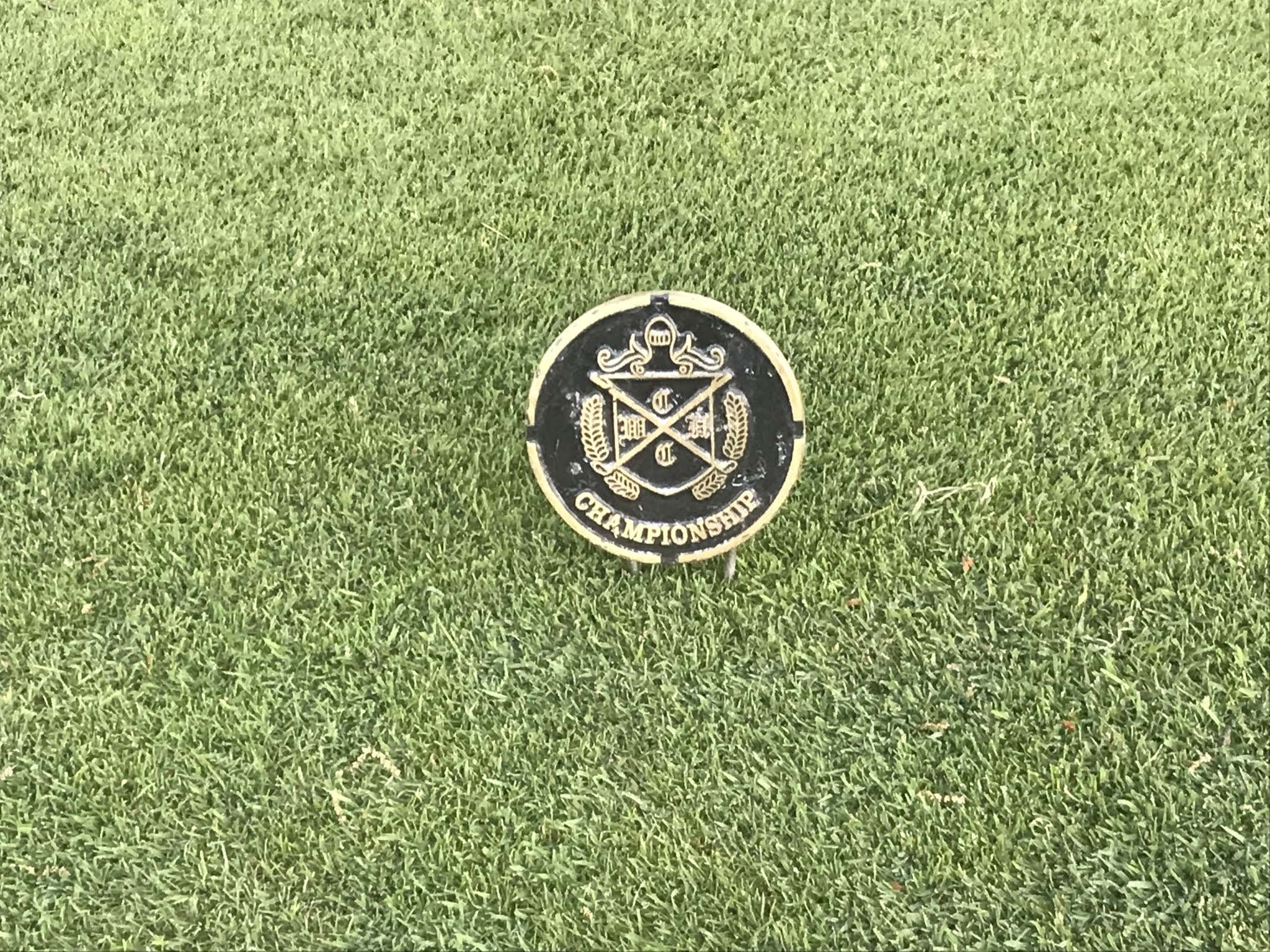
New tee markers have replaced the 25 year old markers that were showing their age. The new markers were designed, deliberated, and eventually approved by two different committees and departments. The updated design reflects the Country Club's current logo, and they are colored for easier recognition of which tees to play from, especially for guests. These markers should last for at least another 25 years.

Old tee marker with old logo

New blue combo tee

New black (Championship) tee

The cicadas are out in full force. The male's serenading music is almost deafening at times and dead cicadas are dotting many of the greens, especially ones underneath trees. The females are just beginning to deposit their eggs in tree branches so it may be another month before we see any signs of tree damage. 


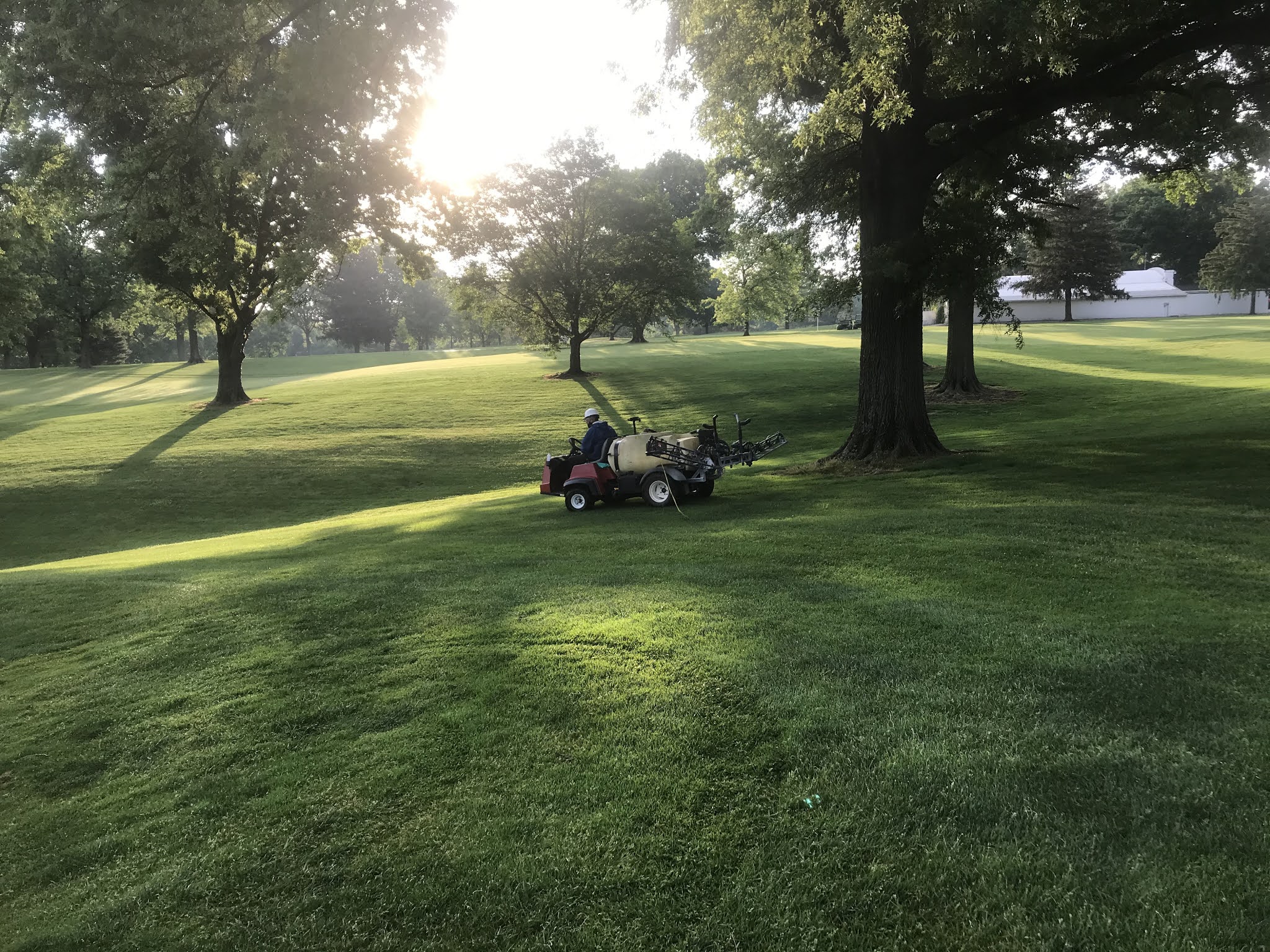
Herbicide applications are being applied to rough, fairway, and tee areas to decrease the amount of broadleaf weeds on the golf course. Clover is not an easy weed to eradicate and persistence is the only chance of decreasing it. We will continue to make herbicide applications until the weather gets too hot and herbicide spray is not recommended.

Rough herbicide application

Currently, labor is an issue in many industries. The landscape/grounds industry has not been spared and it has been extremely difficult recruiting and hiring the right employees. The old way of most employees working full-time hours seems to be a thing of the past. The majority of the newer generation workers and the older, retired generation workers want flexible, part-time work. So to attract more interested employees, and to meet this limited working hours demand, we have increased our seasonal part-time staff by 100% (from 10 to 20). This requires more training, but gives us the opportunity to sub workers in when others are off or on vacation. I'm not sure if this is a trend that is here to stay or Covid related, but the Grounds Department is adapting to the changes and is getting work accomplished. We just ask for patience as we delve into this uncharted territory.

There are many projects on the horizon including landscape lighting to illuminate the Champion overcup oak tree, and cart path repairs. I will continue to update as these activities take place. 


Brad Piecuch

Grounds Superintendent


Saturday, April 24, 2021

April snow showers bring May?


Cercis canadensis 'Appalachian Red' in full bloom and covered in snow!

It has been an unusual April. Typically, this month is cool and wet; however, this year April produced a plethora of extreme warm, cold and dry conditions. After starting the month with snow and frigid temperatures, that killed off early blooming flowers, it then quickly pushed up to 80° for a week. Then in the middle of the month three inches of snow fell along with many frost delays. This was a perfect setup for the tulips, pushing them into bloom around Easter, and the cool second half extended their flowers an extra week. In addition, the dry conditions throughout the month allowed the golf course to play firm-similar to late fall conditions. As we move forward the chances for rain seem to be increasing which would cause the golf course to go back to regular spring conditions-soft, wet, long rough, and medium green speeds.

Saucer magnolia's flowers scorched by an early spring freeze

The golf course on April 21st

Annual tulip display

Our green's maintenance program is underway. Topdressing, verticutting, and spraying have begun, helping to make the putting surfaces firm and fast during the early spring season. On June 1, the greens are scheduled for deep-tine aerification and the course will be closed. This is a much needed procedure that will help the health of the greens heading into the very stressful summer season (for more information click here for an informative USGA article. on aeration). 


The taxus bushes adjacent to #1 tee were removed. This will help with safety, allowing people coming from the driving range to see golfers teeing off #1 tee, and opening up the view of the golf course from the pro shop and patio dinning area. It will take a couple weeks for the sod to root in, but judging by the initial reception it was a much needed improvement. 

Taxus bushes before


Sodding in the snow


#1 tee after removal and new sod added


Extra sod was used in the bare area by #16 green bunker

Much of the cool season grass is exploding out of its winter dormancy; however, as the grass grows so does the springtime weeds. Some of these weeds include dandelions, purple deadnettle, chickweed, hairy bittercress, and violet. One of the most invasive spring weeds is lesser celandine. It is a short lived perennial that is on the rise in our area. It is a non native plant brought here from Europe in the 1800s. It blooms in the spring, then dies down to the ground in the summer, and returns the following spring as an expanded colony. It forms a dense mat that chokes out many of our native woodland plants. We are currently making herbicide applications to eliminate this weed and other broadleaf weeds on the golf course.

Lesser celandine taking over the wood’s floor by #4 tee

Dandelions

Herbicide spray of all the rough has been completed

The irrigation system is up and running and, as usually is the case, many irrigation leaks have needed to be repaired. Bell-end pipe leaks and loose irrigation heads have been the most abundant issues in the early season.

A fixed pipe leak #10 tee

Bell-end pipe leak #3 tee

Hopefully May brings us back into the normal spring temperatures and the Grounds Department is looking forward to a great upcoming golf season. As always you can email us with any questions or concerns at maintenance@westernhillscc.com.

Brad Piecuch                                                       Grounds Superintendent                                                                                                                               

Thursday, March 18, 2021

Spring Projects


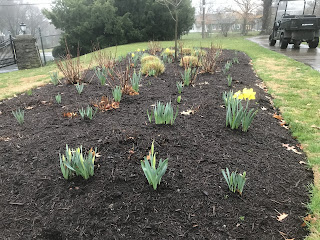
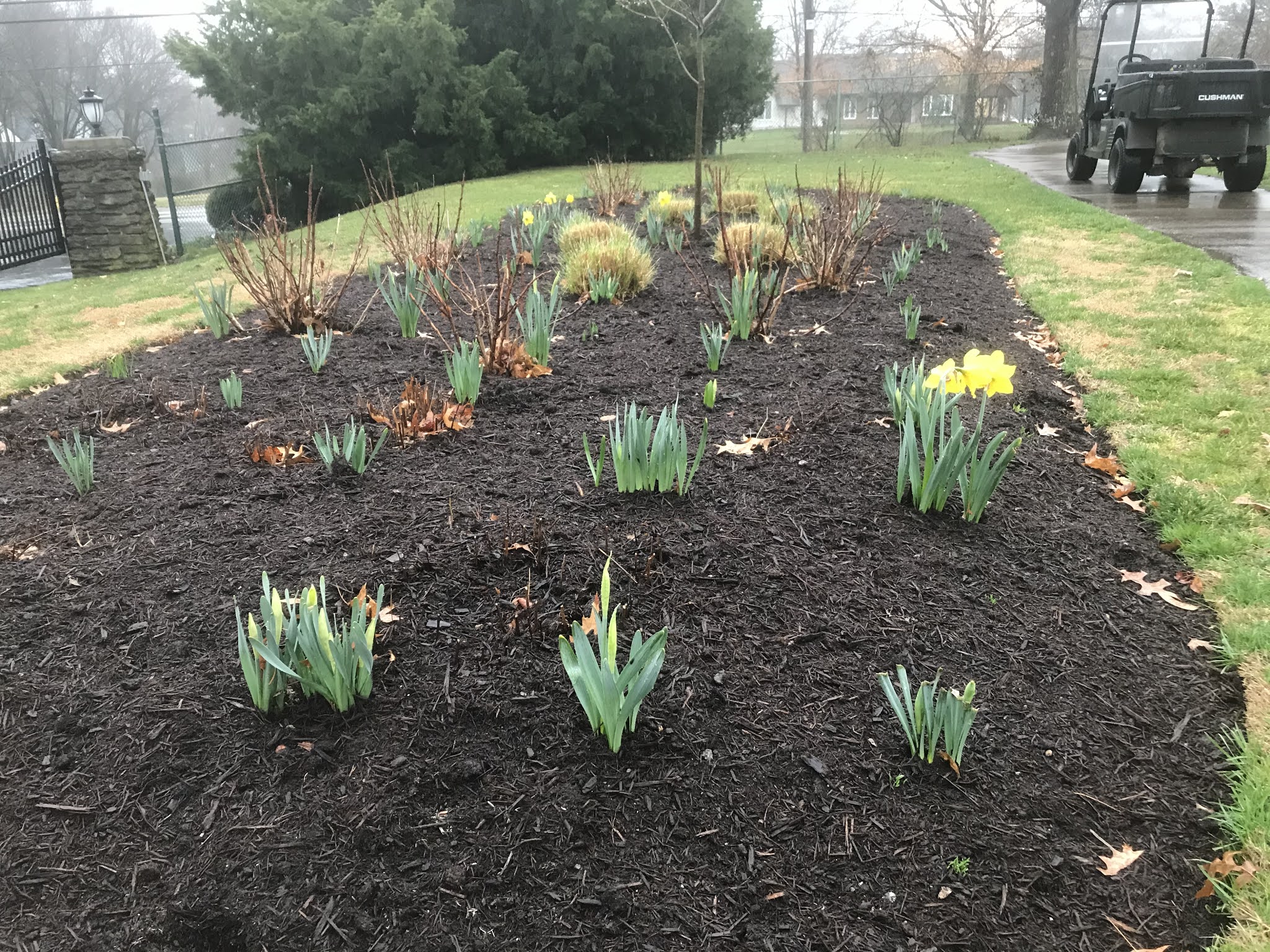
After the coldest February in 32 years, the tide has now turned and we are officially into spring. The forecast looks promising for an above average April and hopefully any major cold outbreaks are a thing of the past. The daffodils, tulips and hyacinths are springing up out of the ground and the turfgrass is changing colors from a dull brown to green. The Horticulture team is busy cleaning out landscape beds and adding a fresh layer of mulch before the bulbs begin blooming and-even more evidence that spring is here-the fountain has been cleaned out and turned on for the first time this year. After cleaning, pruning, and mulching around the clubhouse grounds we will start on the beds on the course and begin installing new landscape areas that were approved during the winter.

Tulips emerging

First daffodils starting to bloom

Meanwhile, the Agronomy team is busy finishing up winter projects and beginning spring maintenance. The stump holes, from removed trees over the winter, have been cleaned out and filled with topsoil. We will start seeding some of these areas that are further out in the rough and the holes closer to fairways will be sodded later this month or early April.  Bunker work has been completed and now we are beginning to add sand to bunkers that need it. #17 fairway bunker, #2 green, #9 green, #14 green, #10 green, and #12 green bunkers have all had new drainage added and should drain well this season. Also, the thick February snow pack produced some pink snow mold on a few fairway areas and they should grow out of it once warmer temperatures prevail.

Snow mold on #9 fairway

#12 green bunkers after old sand was removed, drain tile cleaned, and new sand added.

In early March dormant seeding was completed in many rough areas. The abundant amount of trees that call WHCC home thin out many locations from shade and competing roots. This spring we overseeded to fill in these areas with a shade seed mixture. Thin rough spots in sunny locations received a turf-type tall fescue and perennial rye grass mixture.  Over 1,000 lbs of dormant seed were applied to the rough this spring and should help to make a thicker stand once germination begins in April.

Dormant seeding between #13 tee and fairway

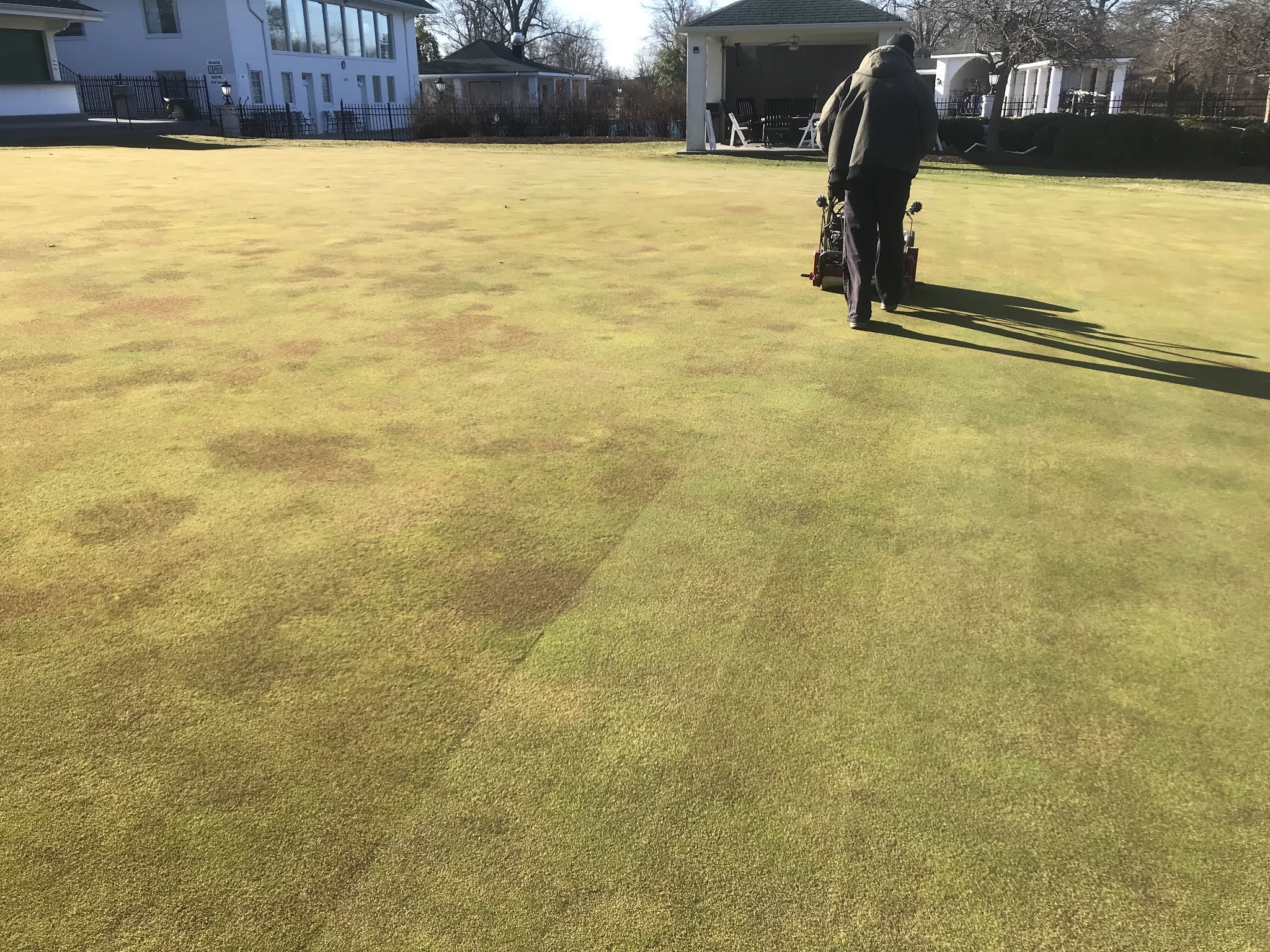
Mowing has begun on fairways, tees and greens. The greens came out of the winter looking very healthy and rolling/mowing combined with low clipping yield has produced fast greens to begin the 2021 golf season. The fairways and tees are greening up and the rough will need its first mow around the start of April. The new tee on #13 and the back of #18 have been topdressed and are rooting in well. They should be ready to open up in April.

First green's mowing of the season

Topdressing the new area on the back of #18 tee

This spring, verticutting has been completed on all the fairways. As I have written about in a previous post (click here to read) the fairways have accumulated a decent amount of thatch. Verticutting these fairways will decrease the organic matter at the surface leading to healthier and firmer fairways. In addition, vertical turfgrass growth will encouraged the grass to stand up making for better lies. It will take a few verticutting applications for the thatch to noticeably decrease; however, I am sure in a couple of years it will be much appreciated.

Verticutting #1 fairway

Picking up debris from verticutting with the John Deere TC-125 harvester.


Overseeding of burmuda grass areas that was done last fall looks promising. #11 fairway was overseeded with HGT bluegrass and #15 fairway was overseeded with intermediate ryegrass. So far the ryegrass is the winner, but the bluegrass usually starts out patchy and fills in during the season. The downside with intermediate rye is that it needs to be reseeded every year where the bluegrass does not. We will continue to monitor and come up with a game plan for this fall at a later time.

Dormant Bermuda grass (back right corner on top of hill in this picture) on #15 fairway hillside in 2019

The same area overseeded with intermediate rye in March 2021. We only overseeded the top of the hill and the left side of the hill before the valley for this experiment. We had some skips and should use more seed in the future but the results still look good. 

HGT bluegrass and annual bluegrass filling in Bermuda patch on #11 fairway. Patchy for now, we will see how it progresses.

In the next few weeks, the Grounds Crew will start our greens maintenance program-topdressing, spraying, fertilizing, verticutting along with increasing the daily maintenance jobs. Spring has sprung and we will continue to accomplish tasks that will help the golf course play and look well heading into the summer months. Happy spring!

Brad Piecuch
Grounds Superintendent


Wednesday, February 10, 2021

Old Man Winter's Revenge


The Polar Vortex has descended, and set up shop over the Tri-State. After a slightly above normal December and January, February is looking very cold. An overachieving snowstorm on February 9th dropped around 5+ inches of snow, adding to the snow that we received in early February, and there looks to be more on the horizon. Looking back on recent winters, this seems to be one of the coldest we have had in recent memory. Compared to the last two winters where we were mowing greens and fairways in January and February, this year we have not mowed any turf since December 10th.  Also, typically this time of year we have between 20 and 50 GDDs by mid February (Growing Degree Days-used to measure bloom time and insect emergence based on the amount of average 24 hour daytime/nighttime temperatures that are greater than 50 degrees). According to the Ohio State Phenology Calendar, currently we have zero. This is the least GDDs for this area since 2010 when we had 1 by this time. The consistent early winter temperatures (no extreme warm temperatures like highs in the 60s) and the recent cold spell have resulted in 0 GDDs. This is actually a good thing, holding off the blooms of early blooming plants that would be susceptible to hard freezes. On a side note, allowing the fruit trees to slowly wake up from winter's grip and become acclimated will help many of the area fruit growers who lost a large number of their crops, especially peaches, last year due to early flowering and a very late season frost. Hopefully this cold weather will yield to a very normal spring and help many of these plants bloom regularly.

 Luckily, for the Grounds Department, most of the tree work has been accomplished before old man winter blanketed the area. All of the in-house and contracted tree removals have been completed, and all the limb removals have been accomplished. Now the Grounds Department is starting the stump grinding removal process. All the cut trees have stumps that have been ground out and the grindings need to be removed , filled with topsoil, and seed or sod added. This is a long process and takes a couple weeks to accomplish, weather permitting. 


Limbs removed left of #4 fairway

Limbs removed right of #4 fairway to help with chip shots to green

Tree company climbing pin oak tree left of #4 fairway

Finished product left of #4 fairway. Now very open.

Stump grindings of dying cherry tree by #6 cart path

Stump grinding removal

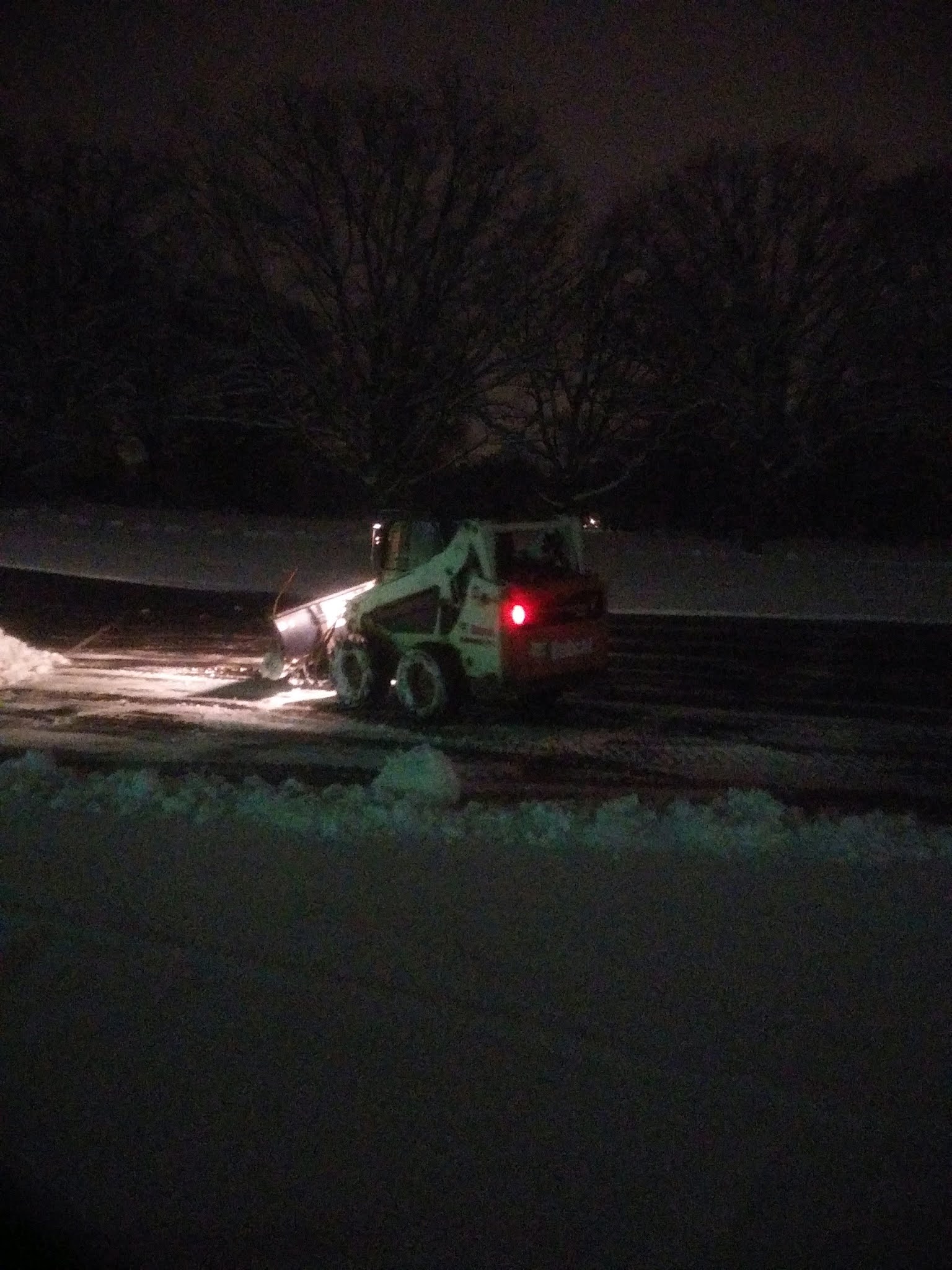
The recent snowfalls have the Grounds team busy with snow removal. The cold snap has left the pavement temperatures below freezing. Any snow that has recently fallen has left the parking lot slippery and snow covered. The Grounds crew has done a fantastic job making sure the lot is clear, staying on call during club hours and plowing as early as 3:00 AM, before patrons arrive. The new snow blower that was purchased last year is finally getting good use.

Michael Westendorf plowing the parking lot in the early morning hours

Chris Wheeler and the new snow blower making quick work of the circle driveway

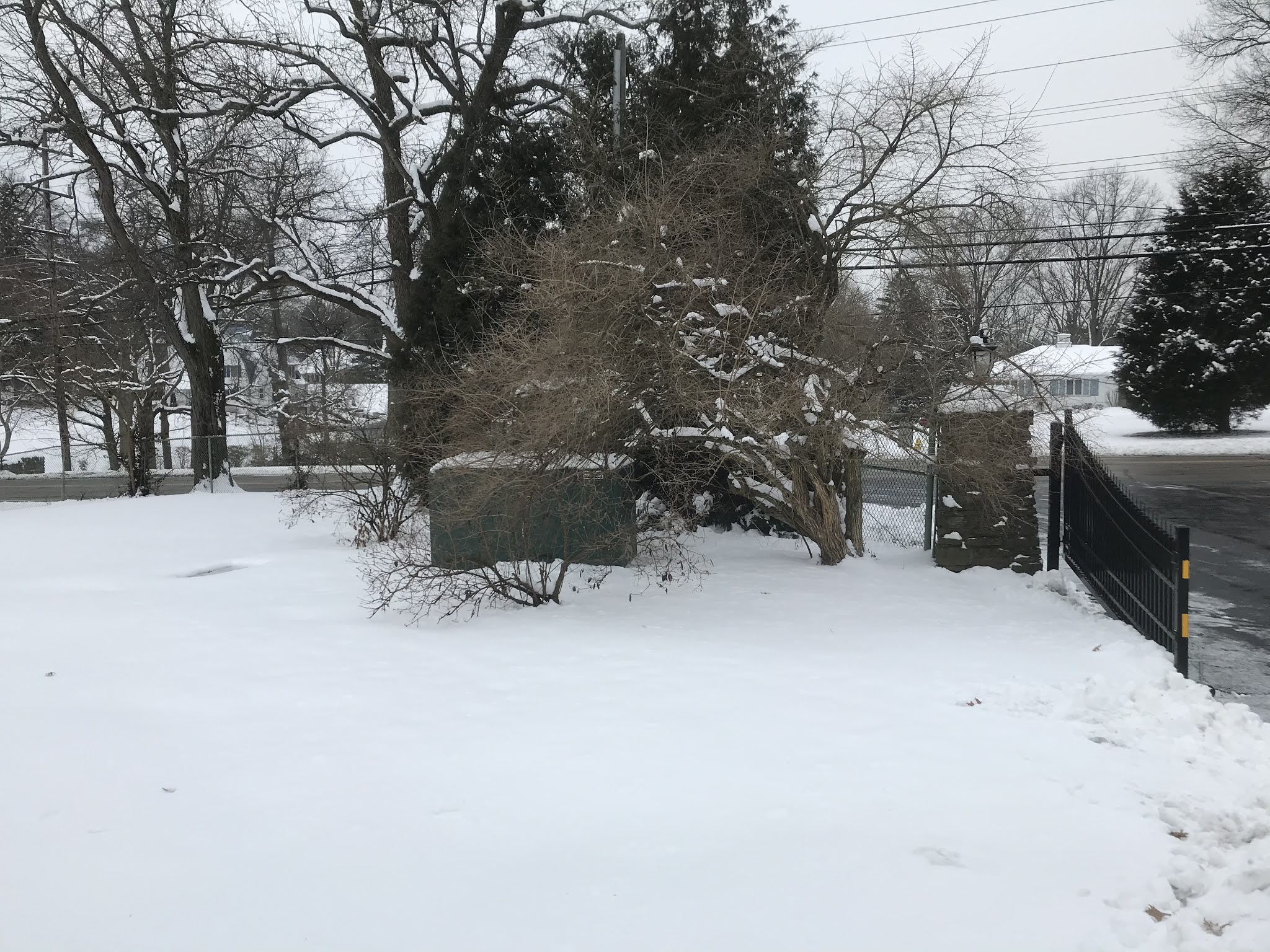
The Horticulture team is busy drafting landscape designs. One area that will be getting an upgrade is to the right of #12 tee by the entrance. Currently, there are old irrigation pits, a main line water shut off box, and a power meter station in that location, and it could use some sprucing up. There is a big amur honeysuckle bush (an invasive weed) by the main entrance that needs to be removed and replaced with a green giant arborvitae to match the other plant material. The design will include limelight hydrangeas, tiny tuff stuff hydrangeas, feather reed grass, emerald green arborvitaes (for screening of #12 tee), and stewartstonian and fushai azaleas. This should add good color and interest to an otherwise bare area. 

Honeysuckle bush by the entrance will be replaced with a green giant arborvitae to match the ones behind it. The water valve box will be hidden by limelight hydrangeas.

Design for the right of #12 tee/entrance

Next landscape design area to include #5 yardage marker.


Soon old man winter and his polar vortex will be a distant memory and we will be busy with spring-time maintenance once again. Until then, the Grounds team will continue to tackle the important winter projects and we look forward to having a great 2021 season.

Brad Piecuch

Grounds Superintendent